Sangalaki Island

Sangalaki Island
Sangalaki Island — Derawan Archipelago, Berau, East Kalimantan

Updated: August 2026

Sangalaki Island is a small island in the Derawan Archipelago, Berau Regency, East Kalimantan, and it is the one stop in the region where reef manta rays feed in shallow water close to shore while green turtles come ashore at night to nest. It has no airstrip and no town: you reach it by speedboat from Derawan Island in around 45 minutes, spend a few hours in the water, and sleep elsewhere.

Indonesia Juara, part of Juara Holding Group since 2015, includes Sangalaki as one of nine named stops on its private Derawan trips, which run from April to November and meet at Kalimarau Airport (BEJ) in Berau. This guide covers what is actually at Sangalaki, how to get there, when the mantas are most reliable, how long to stay, and what the trip costs.

Sangalaki Island is the manta ray and green turtle island of the Derawan Archipelago

Every island in the archipelago has one thing it is known for, and Sangalaki has two: manta rays and nesting green turtles. The mantas are the daytime reason to go and the turtles are the night-time one, which is why Sangalaki appears on almost every serious Derawan destinations itinerary even though nobody sleeps on the island.

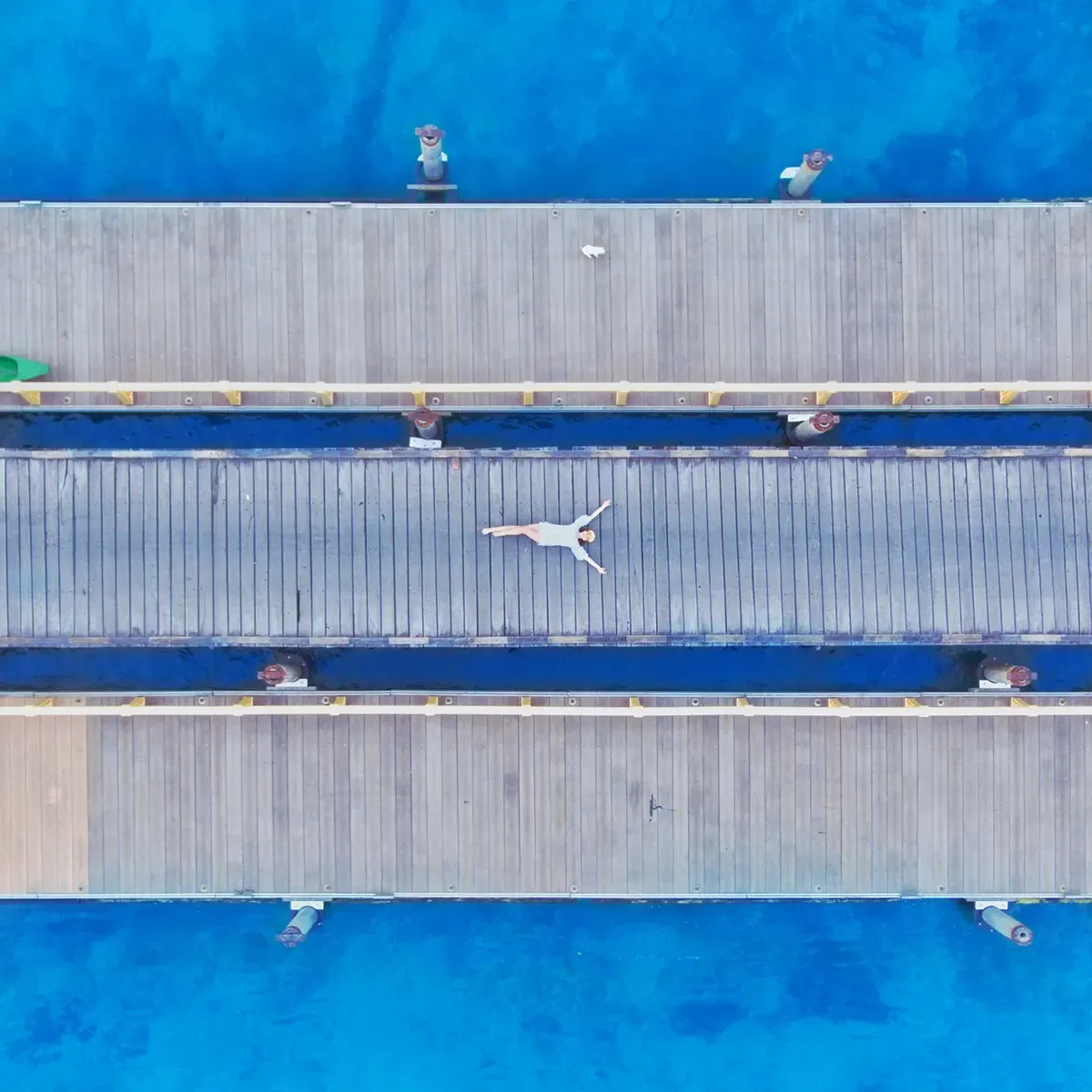
The island itself is small — a low, sandy, tree-covered island ringed by beach, small enough that walking its shoreline takes well under an hour. There is no village, no commercial strip and no resort accommodation, so what you see is the beach, the tree line and the reef flat that runs out from it. Practically everything that makes Sangalaki worth the crossing happens in the water within a few hundred metres of the sand.

FeatureDetail
LocationDerawan Archipelago, Berau Regency, East Kalimantan
Known forReef manta rays and green turtle nesting
AccessSpeedboat only — around 45 minutes from Derawan Island
Accommodation on the islandNone on our itineraries; guests stay on Derawan or Maratua
Typical visit lengthHalf a day, usually paired with Kakaban
Trip seasonApril to November
Water activitySnorkelling and diving; mantas are usually shallow

How to get to Sangalaki Island

There is no direct way to reach Sangalaki. Every route runs through Berau on the East Kalimantan mainland, then out to Derawan Island, and only then to Sangalaki by speedboat. The chain below is the route our private trips use, and it is the same chain independent travellers follow.

LegModeApproximate time
Jakarta, Bali or Balikpapan to Kalimarau Airport (BEJ), BerauFlight, usually with one connectionVaries by routing
Kalimarau Airport to Tanjung Batu coastRoad transferAround 2 to 2.5 hours
Tanjung Batu to Derawan IslandSpeedboatAround 30 minutes
Derawan Island to Sangalaki IslandSpeedboatAround 45 minutes
Sangalaki to Kakaban IslandSpeedboatUnder 30 minutes

Kalimarau Airport (BEJ) is the meeting point for every private trip we run, so the road and boat legs above are handled for you once you land. If you are still working out flights, the full arrival chain is on how to get to the Derawan Islands and the airport-specific detail is on Derawan via Berau. Travellers already in North Kalimantan sometimes come the other way, which is covered on Derawan via Tarakan.

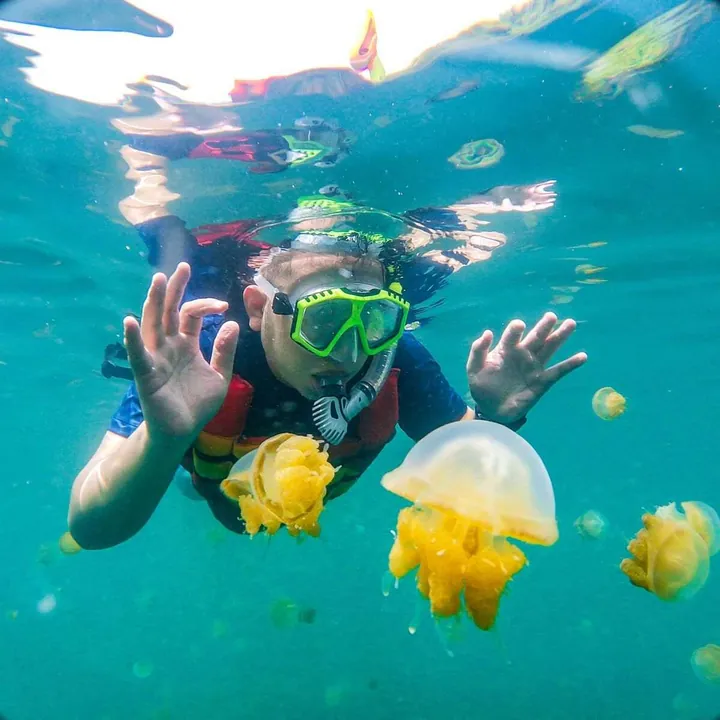
Because Sangalaki sits under 30 minutes from Kakaban, the two are almost always run on the same day. That single day — Sangalaki for mantas, Kakaban for the jellyfish lake — is the core of a Derawan island hopping tour and the reason most people book the archipelago at all.

What you see at Sangalaki: manta rays feeding in shallow water

Reef manta rays are the headline. They gather off Sangalaki to feed on plankton, and the feeding happens near the surface rather than deep on a reef wall, which changes the entire experience. At most manta sites in Indonesia you descend to a cleaning station and wait; at Sangalaki the animals are often in the top five to ten metres of water, moving in slow loops with their mouths open.

That shallowness is why manta ray snorkelling at Sangalaki is genuinely competitive with diving here. A snorkeller floating on the surface and a diver at eight metres are frequently looking at the same animal. Reef mantas commonly measure around three metres across the wings, and seeing one pass a body-length below you is the single image most travellers take home from the Derawan Archipelago.

Sightings are never guaranteed — mantas are wild animals and plankton moves — but the odds at Sangalaki are among the best in Indonesia, and boats will often reposition two or three times in a session to find feeding groups. Nearby Manta Point is a second shallow feeding area used on the same day when conditions favour it.

Sangalaki manta season: April to November is the practical window

Reef mantas are present around Sangalaki through the year rather than migrating in and out, so “manta season” here is really a question of whether you can get to the island comfortably. Our private Derawan trips run from April to November, and that eight-month window is the answer for almost every visitor.

The reason is sea state, not the rays. The leg from Derawan to Sangalaki is around 45 minutes of open water, and the onward hop to Kakaban adds more. Between roughly December and March the Sulawesi Sea is rougher and those crossings become weather-dependent, which means a booked manta day can be lost to swell even when the mantas themselves are exactly where they always are. Booking inside April to November removes most of that risk.

PeriodCrossing conditionsManta prospects
April to NovemberCalmest window; our trips operateBest combination of access and sightings
December to MarchRougher, crossings weather-dependentMantas still resident, but access is unreliable

Green turtles nest on Sangalaki’s beaches

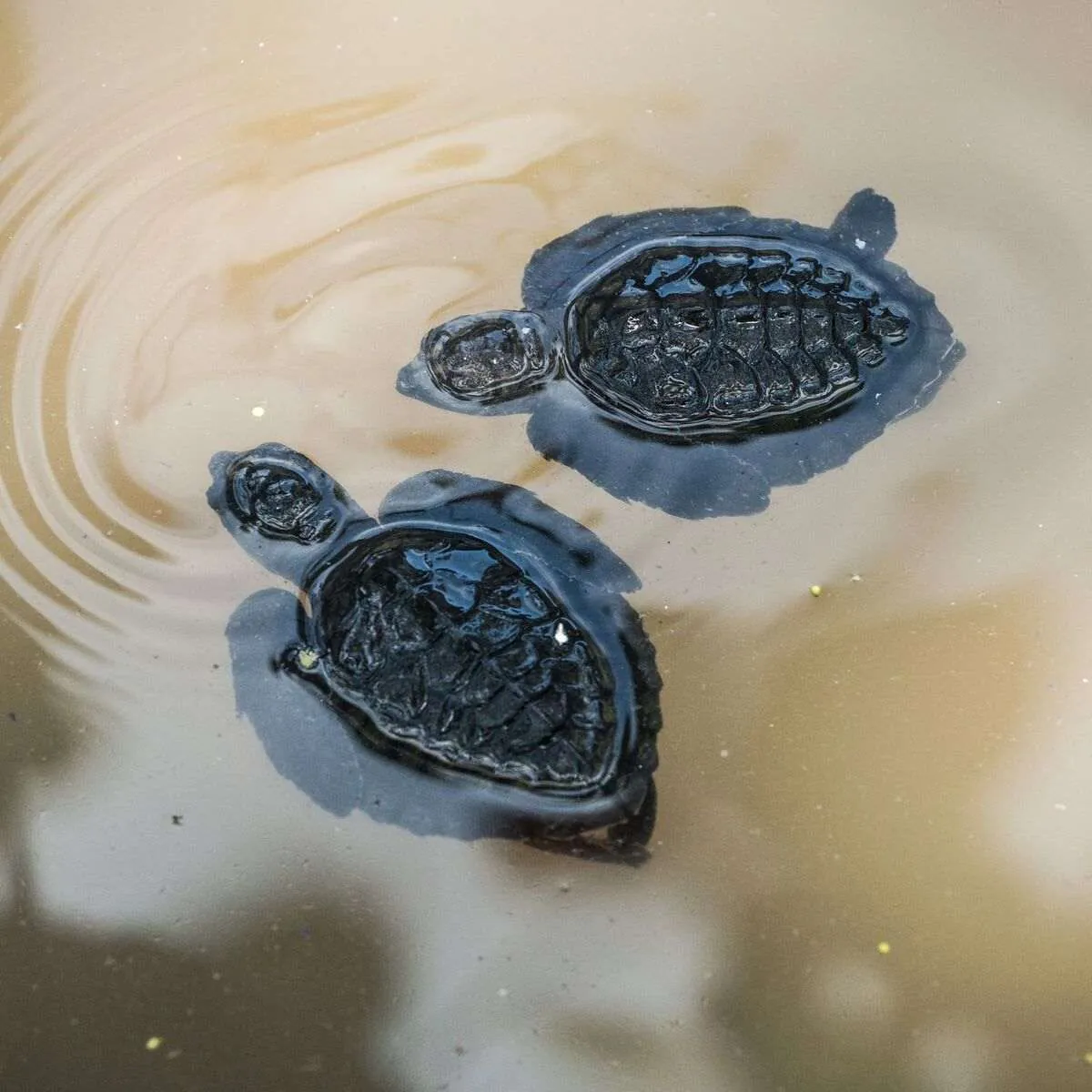
Sangalaki is one of the archipelago’s principal green turtle nesting beaches, and the nesting happens on the sand you land on. Females haul out after dark, dig, lay and return to the sea, and hatchlings emerge from earlier nests and make the same crossing in reverse. The island is treated as a conservation site for exactly this reason, and visitor conduct on the beach is managed accordingly.

Most day visits arrive in daylight for the mantas, so the nesting itself is not something every traveller sees. What you do see routinely is green turtles in the water — around Sangalaki, and even more reliably in the shallows off Derawan Island, where turtles graze under the jetties. The full picture of the archipelago’s turtle population, including the hatchling cycle, is on green turtle nesting in Derawan.

Three rules matter more here than anywhere else in the archipelago: do not touch or ride turtles or mantas, do not use flash or bright torches on a nesting beach at night, and do not dig, sit on or drive anything across the nesting sand. Guides enforce these, and they are the reason the island still produces the encounters people fly in for.

Diving around Sangalaki

Sangalaki dives are gentler than Maratua’s. The reef around the island slopes rather than dropping vertically, and most recreational profiles here sit in the 10 to 25 metre range, which suits divers who are newly certified or who want a relaxed second dive of the day. Mantas encountered on a dive are typically shallower than the profile itself, so time near the surface at the end of a dive is often where the best encounter happens.

Divers who want walls, current and depth pair Sangalaki with the atoll rim at Maratua Island, where the outer drop-offs run past the 40 m recreational limit and the channel produces the region’s strongest drift dives. The full site-by-site breakdown across the archipelago is on Derawan dive sites, and a structured multi-day diving itinerary is set out on the Derawan diving package page.

How long should you spend at Sangalaki?

Half a day is the honest answer for most travellers. There is no accommodation and no reason to be on land for long, so a Sangalaki visit is built around one or two water sessions and a short beach stop, after which the boat continues. Paired with Kakaban Island and its jellyfish lake, that fills one complete and very full day.

Divers wanting more than a single shot at the mantas should build a 4D3N itinerary rather than 3D2N, which allows a second Sangalaki session on a different tide and different light. Photographers usually want the same. Anyone travelling primarily for mantas should also accept the basic arithmetic: one visit is one roll of the dice, two visits roughly doubles the chance of a strong encounter.

Where to stay when you visit Sangalaki

Nobody sleeps on Sangalaki on our itineraries, so the accommodation question is really “where do you base yourself for the manta day”. Two bases work: Derawan Island, which is around 45 minutes away and is where most trips sleep, and Maratua, which suits divers spending several days on the atoll. The properties we use across the archipelago are Reza Derawan Resort, Alfit VIP Borneo Cottage, Sienna Resort, Maratua Paradise Resort, Arasatu Villa, Pratasaba Resort and Seheku Paradise.

Which property you get depends on the tier you book and on availability for your dates, and we confirm the specific name before you pay rather than after. The comparison of what each base gives you is on where to stay in the Derawan Islands, and the Maratua option in particular is covered on Maratua Paradise Resort.

What a trip including Sangalaki costs

Private Derawan trips that include Sangalaki start from USD 281 per person, and the exact rate depends on your group size and on whether you book the standard or premium tier. The figures below are per person for the private 3D2N / 4D3N trip, with a minimum of two travellers.

Group sizeStandard tierPremium tier
2 travellersfrom USD 580 per personfrom USD 672 per person
3 travellersfrom USD 442 per personfrom USD 506 per person
4 travellersfrom USD 391 per personfrom USD 437 per person
5 travellersfrom USD 331 per personfrom USD 368 per person
6 travellersfrom USD 359 per personfrom USD 391 per person
7 travellersfrom USD 340 per personfrom USD 368 per person
8 travellersfrom USD 322 per personfrom USD 345 per person
9 travellersfrom USD 281 per personfrom USD 304 per person
10 travellersfrom USD 285 per personfrom USD 304 per person

The per-person rate falls as the group grows because the boat, fuel and guide are shared across more travellers, which is why two travellers pay more each than nine do. These are starting rates rather than fixed prices — dates, tier and final routing all move the number, so we quote per request. Full day-by-day inclusions are on the Derawan island tour and Derawan trip pages. To check dates that include Sangalaki, write to sales@indonesiajuara.asia.

How Sangalaki fits the rest of the archipelago

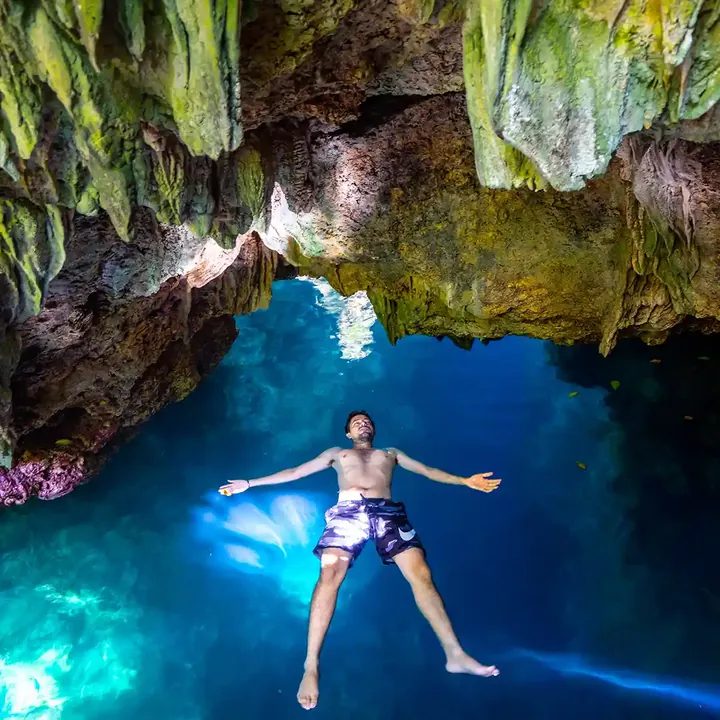
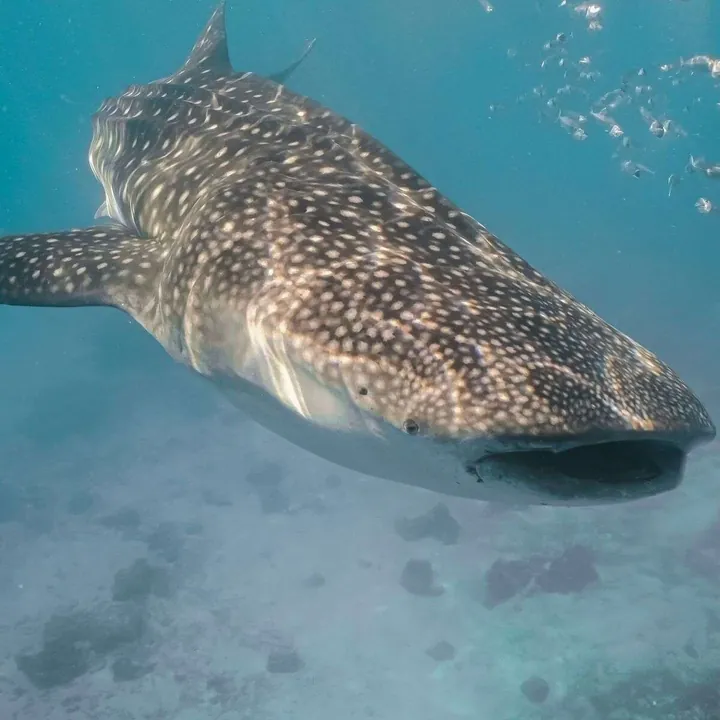
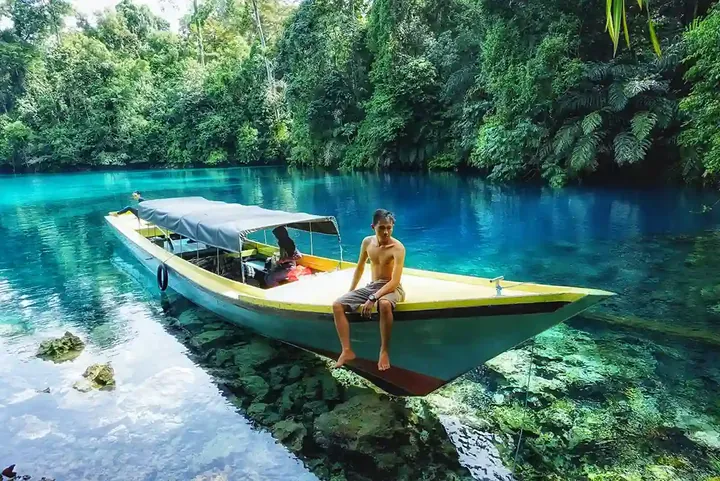
Sangalaki is one stop of nine, and it is worth seeing where it sits. Talisayan on the mainland coast delivers whale sharks at first light, Kakaban delivers the stingless jellyfish lake, Maratua delivers the wall and channel diving, Labuan Cermin delivers the two-layer lake on the road corridor, and Sangalaki delivers the mantas and turtles. A complete route touches all of them.

  • Kakaban Island — the jellyfish lake, run on the same day as Sangalaki because they sit under 30 minutes apart.
  • Maratua Island — the atoll rim, the deepest diving in the archipelago and the only island with an airstrip.
  • Talisayan whale sharks — an early-morning mainland stop, usually the first or last leg of the route.
  • Labuan Cermin Mirror Lake — the fresh-over-salt lake attached to the road legs rather than the boat legs.
  • Derawan snorkelling spots — the full shortlist of reef and shallow sites across the islands.
  • Derawan liveaboard — for divers who prefer to sleep on the boat and reach Sangalaki without a daily return crossing.

Frequently Asked Questions

Where is Sangalaki Island?

Sangalaki Island lies in the Derawan Archipelago in Berau Regency, East Kalimantan, Indonesia. It is a small, low, sandy island with no airstrip and no town, reached only by speedboat — around 45 minutes from Derawan Island, which is where most travellers sleep. Every route to it begins at Kalimarau Airport (BEJ) in Berau, followed by a road transfer to the Tanjung Batu coast and a boat crossing to the islands.

Can you see manta rays at Sangalaki without diving?

Yes — manta rays at Sangalaki commonly feed in the top five to ten metres of water, so snorkellers see them as often as divers do. That is unusual: at most Indonesian manta sites the animals are down at a cleaning station and only certified divers get close. At Sangalaki a snorkeller on the surface and a diver at eight metres are frequently watching the same animal pass beneath them, which makes the island suitable for non-divers travelling with divers.

When is the best time to see mantas at Sangalaki?

April to November is the practical Sangalaki manta season, because that is when the crossings are calmest and our trips operate. The reef mantas themselves are resident around the island year-round rather than migrating in and out, so the limiting factor is sea state, not the animals. Between roughly December and March the open-water leg from Derawan becomes weather-dependent, and a booked manta day can be lost to swell even when conditions underwater would have been fine.

How long does it take to get to Sangalaki Island?

The boat leg from Derawan Island to Sangalaki takes around 45 minutes. Before that, you fly into Kalimarau Airport (BEJ) in Berau, transfer around two to two and a half hours by road to the Tanjung Batu coast, then cross about 30 minutes by speedboat to Derawan Island. Sangalaki also sits under 30 minutes from Kakaban, which is why the two islands are almost always visited on the same day.

Can you stay overnight on Sangalaki Island?

Our Derawan itineraries do not include overnight stays on Sangalaki — guests sleep on Derawan Island or on Maratua and visit Sangalaki as a day stop. The island has no village or commercial strip, and it is a green turtle nesting beach, so time on land is deliberately kept short and low-impact. The properties used across our trips include Reza Derawan Resort, Sienna Resort, Maratua Paradise Resort, Arasatu Villa and Pratasaba Resort, confirmed by tier and availability.

Do you need a diving licence to visit Sangalaki?

No diving certification is required to visit Sangalaki, because the manta encounters happen shallow enough to snorkel. Certified divers get a second option: reef profiles around the island typically sit in the 10 to 25 metre range on a sloping reef, which is gentler than the walls and drift dives at Maratua. Non-divers and divers therefore share the same day here, one on the surface and one below it, watching the same rays.