Updated: August 2026
Derawan resort investment is the business of building and operating a small, off-grid hospitality asset inside a live marine ecosystem in Berau Regency, East Kalimantan — where the whole archipelago’s guest volume is currently carried by roughly seven properties and the selling season runs only from April to November. It is an operating business first and a real-estate position second, because on these islands the scarce inputs are power, fresh water, boat capacity and trained staff, not square metres of sand.
This page is the lodging and eco-lodge layer of the invest in Derawan category. It assumes you have already read the broader Derawan investment guide for asset classes and company structure, and the detail on land ownership and permits in Berau for title and licensing. What follows is specific to rooms: the demand benchmark, the season that caps occupancy, island-by-island fit, the infrastructure lines that decide viability, and how to test the thesis before committing capital.
A Derawan resort investment is an off-grid hospitality build, not a beachfront property purchase
The mental model that fails here is the villa model — buy land, build rooms, list them, collect. The Derawan Archipelago sits far enough from mainland infrastructure that every service a guest expects has to be manufactured on site or shipped in. Power, potable water, waste handling, cold chain for food, internet, dive gas, boat fuel and staff housing all become capital lines before the first guest arrives, and then become permanent operating lines afterwards.
That reframes the investment question. You are not asking “what is land worth per square metre” — you are asking “what does it cost to deliver one guest night to a standard an international diver will pay for, and how many of those nights can I sell in an eight-month window.” Investors who answer the second question first tend to build smaller, cheaper and more profitably than investors who start with a plot.
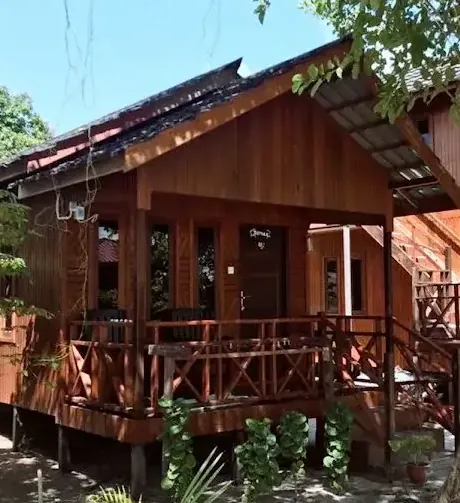
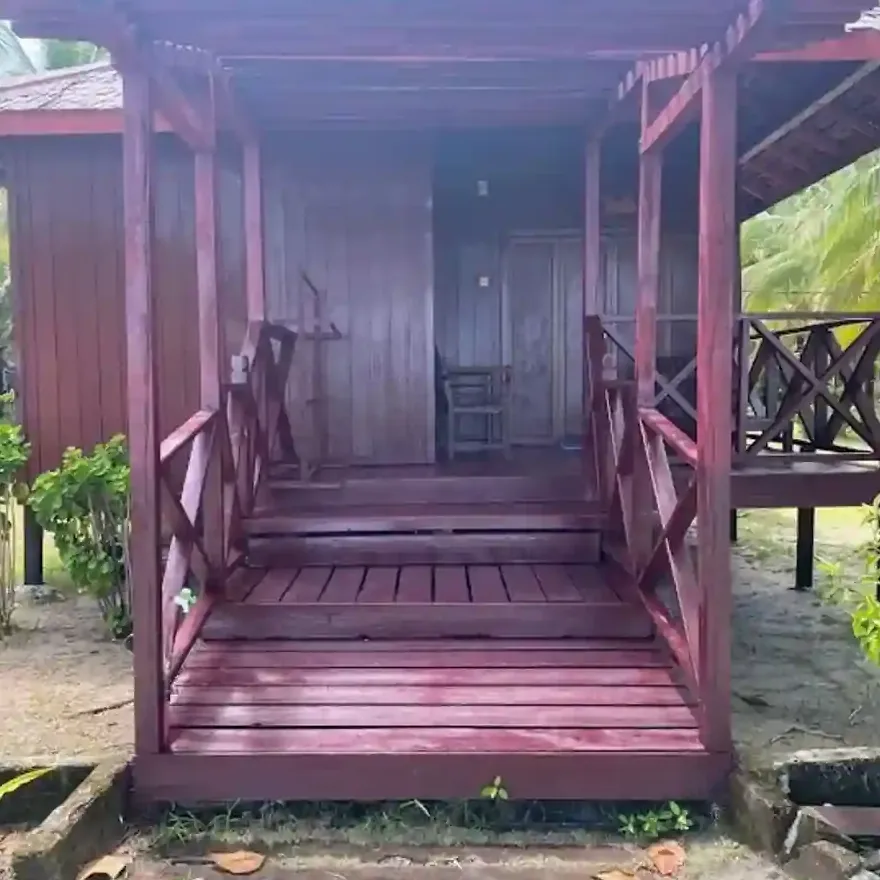
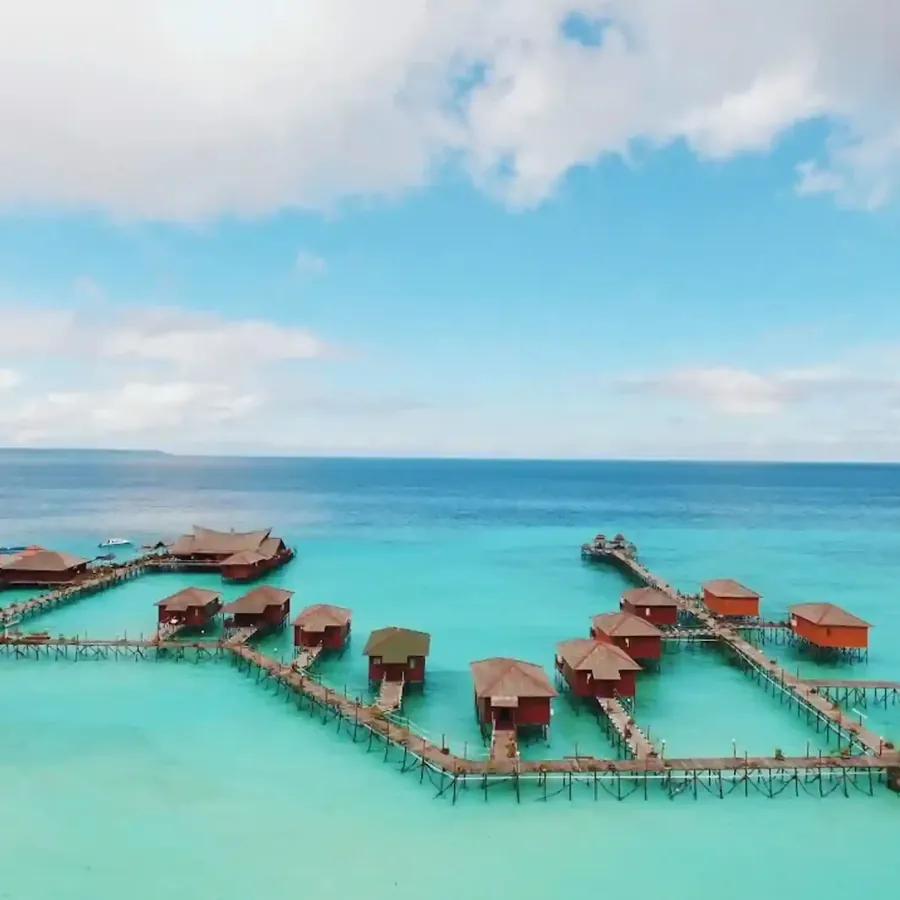
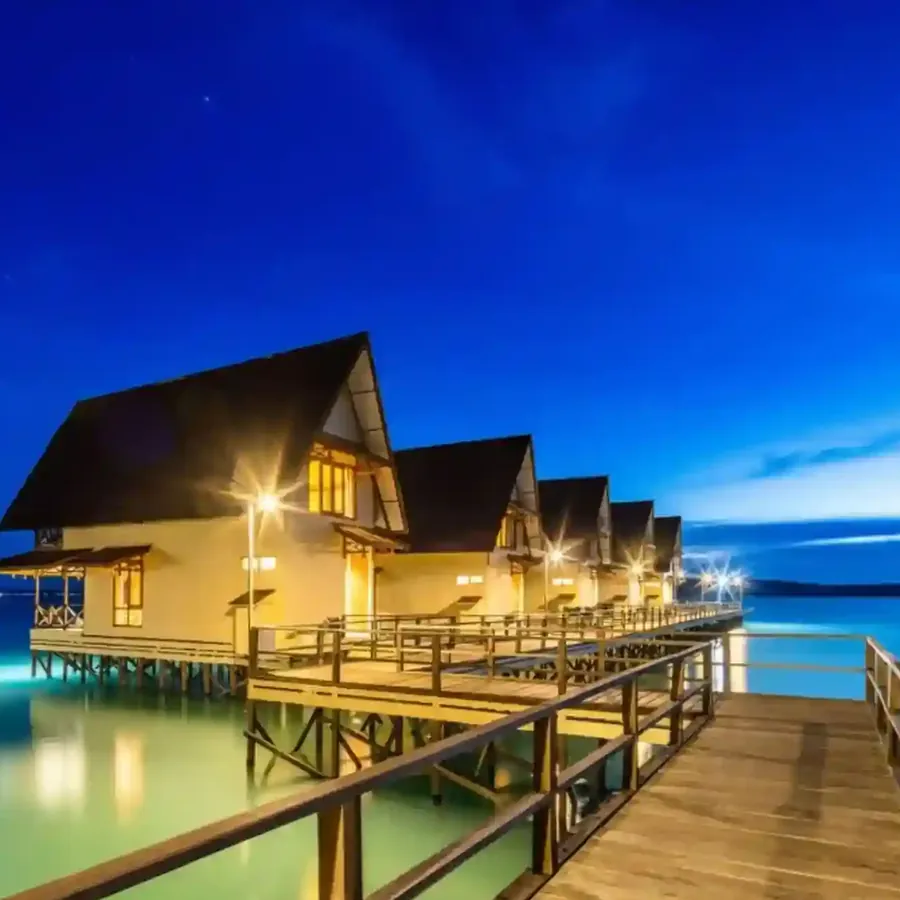
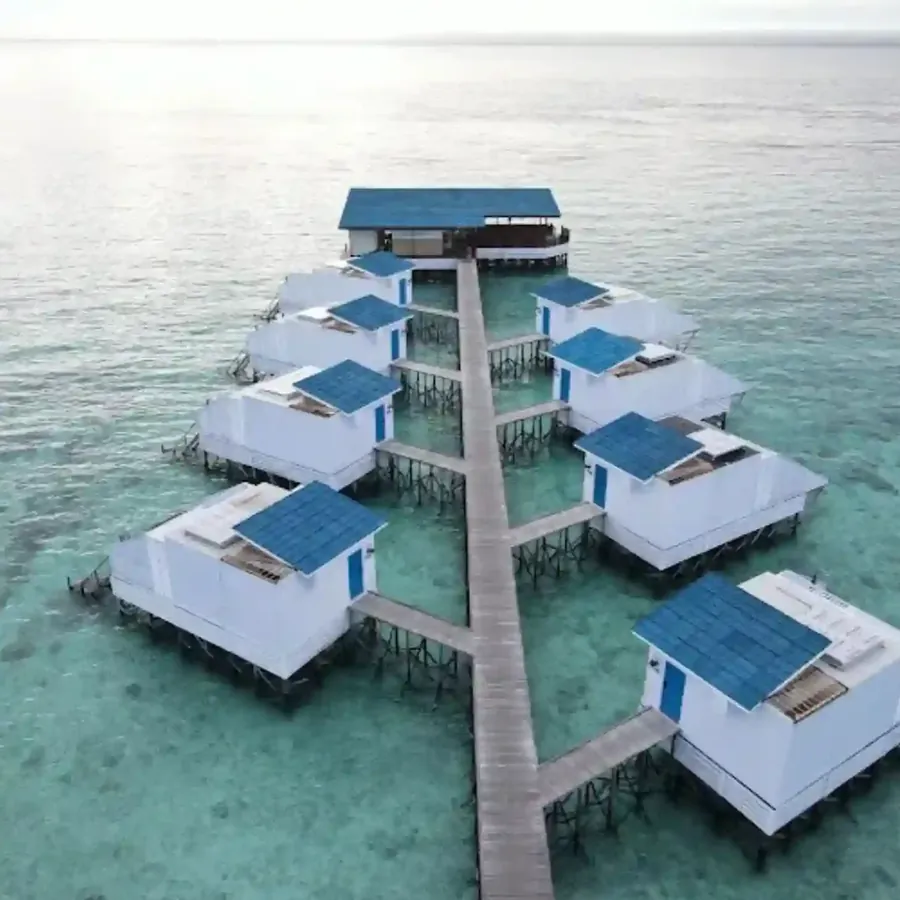
It also explains why the eco-lodge format dominates the credible proposals for this archipelago. Low room counts, timber and local material construction, solar-led power, rainwater and treated supply, and a guest promise built around the reef rather than around a spa are not marketing choices here. They are the cheapest way to build something that functions on an island with no grid, and they are the format that a marine environment will tolerate long term.
Seven properties currently absorb the archipelago’s guest nights
The clearest supply signal available is the property list an active operator actually uses. Indonesia Juara’s Private Trip Derawan runs its guests through seven accommodations spread across the islands and mainland Berau: Reza Derawan Resort, Alfit VIP Borneo Cottage, Sienna Resort, Maratua Paradise Resort, Arasatu Villa, Pratasaba Resort and Seheku Paradise.
Seven properties for a nine-destination circuit is a thin inventory by any standard, and it is the single strongest argument for the supply gap thesis. It is also a warning. A thin market means limited comparable data — there is no reliable published occupancy series, no verified average daily rate benchmark, and no transparent transaction history for island hospitality assets in Berau. Any model you build will rest on primary research you commission yourself, not on a database.
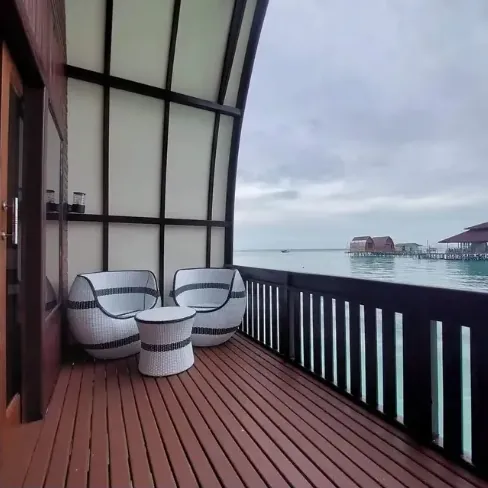
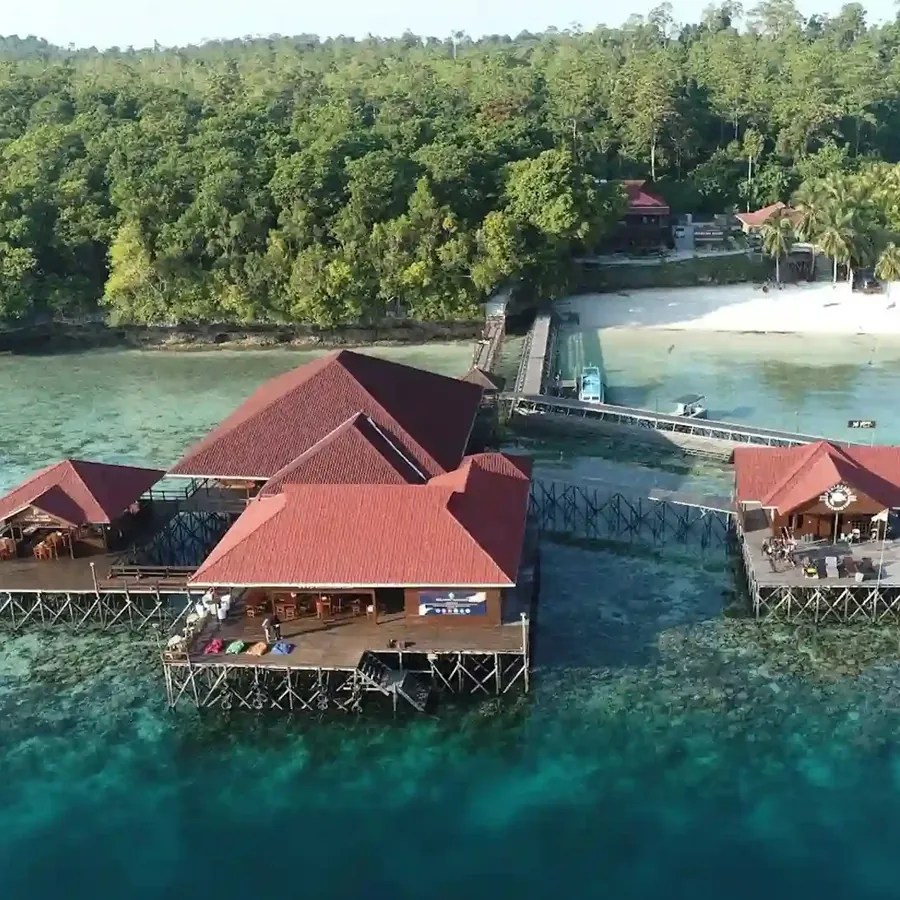
Before you model anything, spend nights in these properties as a paying guest. The where to stay in the Derawan Islands overview maps how they differ, and the individual pages for Maratua Paradise Resort, the Derawan dive resort segment and Derawan homestays show the three price bands a new lodge would be competing against. We publish no invented room counts, star ratings or certifications for these properties — verify those directly with each owner.
The revenue benchmark: what a Derawan guest already pays per trip
Model the customer before you model the building. The table below is the current per-person retail pricing for the Private Trip Derawan 3D2N / 4D3N operated by Indonesia Juara, with a minimum of 2 participants and a meeting point at Kalimarau Airport (BEJ) in Berau. Rates are quoted from a rupiah base and converted at a reference rate of 16,300 IDR to the US dollar, so read every figure as a from price that moves with group size and tier — not as a fixed rate.
| Group size | Standard tier — from USD per person | Premium tier — from USD per person |
|---|---|---|
| 2 people | from USD 580 | from USD 672 |
| 3 people | from USD 442 | from USD 506 |
| 4 people | from USD 391 | from USD 437 |
| 5 people | from USD 331 | from USD 368 |
| 6 people | from USD 359 | from USD 391 |
| 7 people | from USD 340 | from USD 368 |
| 8 people | from USD 322 | from USD 345 |
| 9 people | from USD 281 | from USD 304 |
| 10 people | from USD 285 | from USD 304 |
Three things an investor should take from that table. First, the market clears in US dollars, which matters when your construction inputs are largely rupiah-denominated. Second, per-person pricing roughly halves between a couple and a group of ten — from USD 580 down to USD 285 on the standard tier — so a lodge whose economics depend on large groups is selling into the weakest part of the price curve. Third, the premium tier commands only a modest uplift over standard at large group sizes but a much wider gap at two people, which tells you where a higher-specification room product actually earns its margin: couples and small parties.
Because the trip is quoted from the Kalimarau Airport meeting point, air tickets into Berau sit outside the figure. The precise inclusion and exclusion list is confirmed per departure and should be requested in writing before any of these numbers enters a spreadsheet. For how the retail product is packaged around these rates, see the Derawan island tour and Derawan trip pages.
An eight-month season sets the occupancy ceiling before you design a single room
The Derawan operating season runs April to November. That is eight sellable months and four months when sea conditions make the archipelago circuit unreliable, and it is the hardest constraint in the entire investment case. A resort that needs twelve months of occupancy to service its debt is the wrong resort for this location.
| Period | Months | Commercial implication for a lodge |
|---|---|---|
| Operating season | April to November (8 months) | All room revenue, all dive and boat revenue, peak staffing, peak supply runs |
| Off season | December to March (4 months) | Maintenance, refurbishment, staff retention cost, near-zero room revenue |
Two practical consequences follow. Skilled staff — dive guides, boat crew, kitchen — will not wait unpaid for four months, so retention through the closed period is a real annual cost line, not a rounding error. And your entire maintenance programme is compressed into that window, which on a saltwater site with timber structures and marine engines is not optional work.
The upside is that seasonality is predictable and it is shared by every competitor. A lodge that plans for eight months and prices accordingly is not disadvantaged; a lodge that discovers the calendar in year one is.
Which island fits which eco-lodge concept
The nine destinations on the standard circuit are Talisayan, Maratua, Kakaban, Sangalaki, Goa Halo Tabung, Manta Point, Pasir Gusung Sanggalau, Laguna Kehe Daing and Labuan Cermin. They are not interchangeable as lodge locations. What a room is worth depends on what a guest can reach from it before breakfast.
| Location | Primary demand driver | Lodge concept it supports |
|---|---|---|
| Maratua | Dive access and existing resort presence | Dive-led boutique lodge, water-facing rooms, on-site dive centre |
| Derawan Island | Main-island access, turtle presence, broadest visitor mix | Mid-market eco-lodge, family and non-diver capable, shortest supply chain |
| Sangalaki | Manta ray aggregation and turtle nesting | Conservation-linked, day-access product rather than large room stock |
| Kakaban | Jellyfish lake, high day-visitor draw | Excursion node, not an accommodation site — protection status dominates |
| Mainland Berau near Talisayan | Whale shark encounters, road access, cheaper build | Land-based lodge with lower infrastructure cost and simpler logistics |
| Labuan Cermin area | Freshwater-over-saltwater lake, mainland circuit | Small mainland stopover lodging, extends itinerary length |
Study the demand drivers directly before allocating capital to a location: Maratua Island for the dive-resort corridor, Kakaban Island jellyfish lake for the archipelago’s most photographed asset, Sangalaki Island manta rays and green turtle nesting for the conservation-led propositions, Talisayan whale shark tour for the mainland draw, and Labuan Cermin mirror lake for the inland extension. The Derawan dive sites page is the closest thing to a demand map for the dive segment specifically.
Off-grid infrastructure is the largest hidden line in an eco lodge investment in Indonesia
The gap between a napkin model and a real one is almost always infrastructure. On an island in this archipelago, the following are capital items and then recurring items, and none of them can be skipped:
- Power — solar array with battery storage plus a generator for redundancy, sized for compressors and refrigeration, not just lighting
- Fresh water — rainwater capture, storage, and treatment or desalination, with a dry-period reserve
- Wastewater and solid waste — on-site treatment and a real plan for removing what cannot be treated, since a reef-adjacent lodge that discharges badly destroys its own product
- Marine access — jetty or landing, boats, engines, fuel storage, and the maintenance regime all of that implies
- Cold chain and provisioning — supply runs from mainland Berau on a schedule your kitchen depends on
- Connectivity — guests paying the rates in the table above expect to be reachable, and your reservation system depends on it
- Staff housing and training — remote sites carry their team on site, which is floor area that earns no room revenue
Together these are why room count discipline matters. Adding rooms multiplies water, power and waste load faster than it multiplies revenue, and the marginal cost curve on a remote island bends the wrong way. The smallest viable lodge that can fill its rooms is usually the strongest asset here.
What IKN tourism growth realistically does for a Derawan lodge
Nusantara (IKN), Indonesia’s new capital project, is being developed in East Kalimantan — the same province as Berau and the Derawan Archipelago. That shared province is the entire basis of the IKN tourism growth argument, and it is worth stating precisely what it does and does not mean, because this is the point where investment cases most often drift into wishful thinking.
What is plausible: a larger administrative and business population in the province, improved air and road connectivity into East Kalimantan generally, greater national marketing attention on the region, and a new domestic short-haul market for whom Derawan becomes a reachable weekend destination rather than a long expedition. Any of those would lift demand for rooms.
What is not established: any specific visitor-number uplift, any timetable for it, any committed transport link between the new capital and Berau, and any guarantee that the effect reaches an archipelago that still requires a flight to Kalimarau plus a boat transfer. We publish no forecast figures here because we have none we can stand behind. Treat IKN as an optional upside in your model — a scenario, not a base case — and verify current infrastructure commitments with Berau Regency and provincial authorities directly. A lodge that only works if IKN delivers is a lodge that does not work.
Conservation is a design constraint, and it is also the product
The reason anyone flies to Berau and takes a boat is what is in the water: manta rays at Sangalaki, the stingless jellyfish lake at Kakaban, green turtles across the archipelago, whale sharks off Talisayan. That biodiversity is the asset your rooms are priced against, which makes environmental performance a commercial variable rather than a compliance chore.
Practically, that means designing for low density, keeping construction back from nesting beaches, controlling light spill near turtle habitat, handling wastewater properly, briefing guests on wildlife interaction rules, and building the local employment and community relationship that lets a remote lodge operate for decades rather than seasons. Investors who treat this as marketing gloss usually pay for it later in permits, community friction or a degraded reef in front of their own jetty.
An operating alternative worth modelling alongside a fixed lodge: floating capacity. A Derawan liveaboard sidesteps land title, coastal permitting and off-grid infrastructure entirely, moves to where the season is best, and can be redeployed if the thesis changes. It is a different risk profile, not a lesser one, but it deserves a column in the comparison.
How to pressure-test a Derawan resort investment before committing capital
A disciplined sequence costs a fraction of a build and removes most of the guesswork:
- Travel the circuit as a guest, in season, staying in several of the seven existing properties and recording what guests complain about and pay extra for. Start with how to get to the Derawan Islands and the Derawan via Berau route to understand the real journey time your future guests will accept.
- Commission primary demand research — arrival data through Kalimarau, operator interviews, dive-centre volumes — because no reliable public series exists for this archipelago.
- Resolve title and permits before design, not after. Coastal land, customary rights, zoning and environmental assessment all sit upstream of architecture; the land ownership and permits in Berau page sets out what to ask.
- Model on eight months, with a stress case at reduced occupancy and a currency case where USD revenue meets rupiah costs.
- Start small or start operating. A dive or boat operation, or a minority position in an existing property, produces real local data at a fraction of the exposure of a ground-up build.
Working with Indonesia Juara on the ground before you build
Indonesia Juara has operated trips through this archipelago under Juara Holding Group since 2015, and that is the specific thing an investor can use: current ground logistics, working relationships with the properties on the circuit, seasonal reality, and what guests actually book and pay. We can arrange the reconnaissance trip, structure it around the locations on your shortlist, and connect you with local counterparts.
What we do not do is broker land, guarantee returns or publish valuations we cannot evidence. Enquiries about a Derawan resort investment go to sales@indonesiajuara.asia — tell us the concept, the location shortlist and the timeframe, and we will tell you honestly what we can and cannot verify.
Disclaimer: this page is general information about the Derawan Archipelago as a hospitality market. It is not financial, investment, legal or tax advice, and it is not an offer of any security or property. Figures shown are indicative retail travel prices, not investment returns. Take independent professional advice and conduct your own due diligence before committing capital.
Frequently Asked Questions
What does a Derawan resort investment actually involve?
It involves building and operating a small off-grid hospitality asset in Berau Regency, East Kalimantan, where the sellable season runs eight months from April to November. Unlike a mainland hotel, the project must self-supply power, fresh water, waste treatment, marine access and staff housing, and those systems are usually the largest capital lines. It is best understood as an operating business with a property component rather than a property purchase with an operating component.
How many accommodation properties already operate in the Derawan Archipelago?
Indonesia Juara’s Derawan itineraries currently use seven properties: Reza Derawan Resort, Alfit VIP Borneo Cottage, Sienna Resort, Maratua Paradise Resort, Arasatu Villa, Pratasaba Resort and Seheku Paradise. That thin inventory across a nine-destination circuit is the core supply-gap argument, but it also means there is no deep comparable dataset. We publish no room counts, ratings or certifications for these properties — confirm those details directly with each operator before using them in a model.
What do travellers currently pay for a Derawan trip?
The Private Trip Derawan 3D2N / 4D3N starts from USD 281 per person for a group of nine on the standard tier and from USD 672 per person for two people on the premium tier. Every figure is a from price that depends on group size and tier, converted from a rupiah base at a reference rate of 16,300 IDR per USD. The trip is quoted from the Kalimarau Airport meeting point in Berau, so flights into Berau sit outside the rate.
Why does the April to November season matter so much to a lodge?
April to November gives a Derawan lodge only eight sellable months, with four months from December to March when the archipelago circuit becomes unreliable. That caps annual occupancy before a single room is designed, compresses all maintenance into the closed period, and creates a genuine cost of retaining trained dive and boat staff through months with almost no room revenue. Any model assuming twelve-month trading is structurally wrong for this location.
Does IKN Nusantara improve the case for an eco lodge investment in Indonesia’s Derawan region?
IKN Nusantara sits in East Kalimantan, the same province as Berau and Derawan, which is the entire basis of the growth argument. Plausible effects include better provincial connectivity, a larger regional business population and a new domestic short-haul market. No specific visitor uplift, timetable or committed transport link to Berau is established, and reaching Derawan still requires a flight to Kalimarau plus a boat transfer. Treat it as upside scenario, never as base case.
Can a foreign investor own a resort outright in the Derawan Islands?
Foreign investors in Indonesian tourism generally operate through a locally incorporated company rather than holding land personally, and coastal land in Berau raises additional title, zoning and customary-rights questions. The structure, the permitted land rights and the licensing sequence all need qualified Indonesian legal and tax advice specific to your case. Start with the land ownership and permits in Berau page for the questions to ask, then take professional advice before signing anything.