Rule 1
Never touch
Their skin carries a protective mucus layer; a hand strips it and opens the animal to infection.
Activities · Manta rays
Reef mantas feed close enough to the surface off Sangalaki that snorkellers, not only divers, regularly see them. Where they are, when to come and how to behave.
Where the mantas are
Sangalaki sits south-west of Maratua and west of Kakaban. Its shallow, plankton-rich water draws reef manta rays close to the surface, which is why a non-diver and a diver can share the same headline encounter on the same morning.
Mantas show up in two ways. Surface feeding: they cruise with mouths open, sweeping plankton from the top few metres, seen by snorkellers. Cleaning stations: they hover over a bommie while small fish clean them, typically at 8 to 20 metres, which is scuba territory.
Reef mantas reach roughly 3 to 4 metres across. They have no stinging barb and no interest in swimmers, but they are easily displaced by bad behaviour in the water.
Snorkel or dive
Most travellers assume a manta encounter needs a scuba certificate. In Derawan it does not.
| Factor | Manta snorkelling | Manta diving |
|---|---|---|
| Certification | None: swimming ability and comfort in open water | Open Water or higher |
| Typical depth | Surface to about 5 m | Roughly 8 – 20 m at cleaning stations |
| Best encounter | Surface feeding, long viewing time | Mantas hovering at a cleaning station |
| Suits | Families, mixed groups, photos from above | Certified divers, eye-level photography |
| On our Derawan trips | Yes, snorkelling is included | Not included: our trips are snorkel-based |
Our Derawan trips are snorkel-based and scuba diving is not included, so the cleaning stations are for certified divers travelling with a dive operator.
Etiquette
Mantas that are chased leave, and mantas that leave do not come back on schedule.
When to go
The window matches the calmer, drier part of the East Kalimantan year, when crossings between Derawan, Sangalaki, Kakaban and Maratua are most reliable. April and May open the season with fewer visitors; June to August is the busiest stretch, so reserve early; September to November is quieter. December to March is the wetter period; open-trip departures still run.
Manta rays are wild animals: nobody can guarantee a sighting on a given day. A good itinerary puts you in the right water at the right time of year.
Derawan via Berau How to get to DerawanIn season Crossings weather-dependent Sea state · visibility
The manta day
Mantas are not sold as a half-day. Sangalaki (Manta Point, turtle conservation) is on day 2 with Maratua and Kakaban; the 4D3N adds day 3: Talisayan whale sharks, Manimbora and Labuan Cermin.
Same water
The manta grounds are one point on a dense wildlife map, which is why Derawan works as one trip rather than separate excursions.
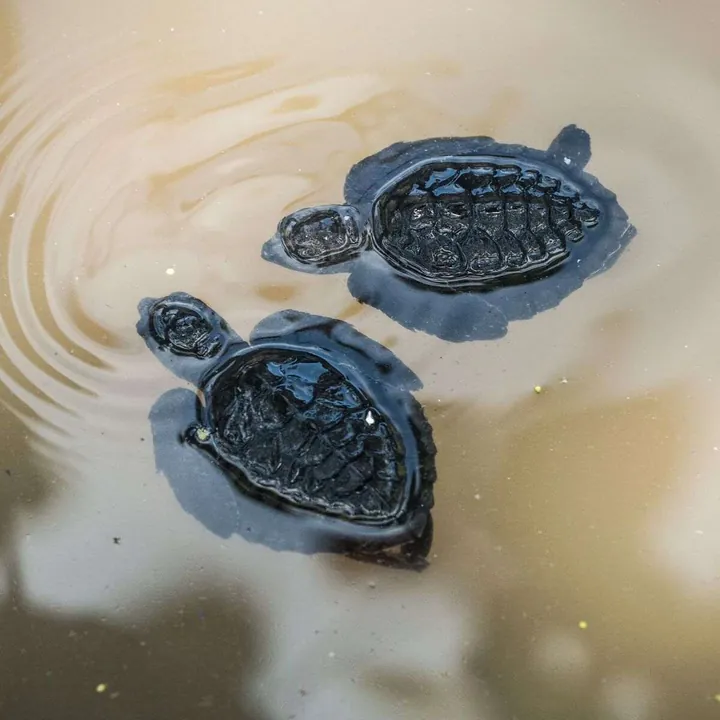 Sangalaki
The same waters are turtle-dense, so a manta morning at Sangalaki almost always produces turtle sightings too.
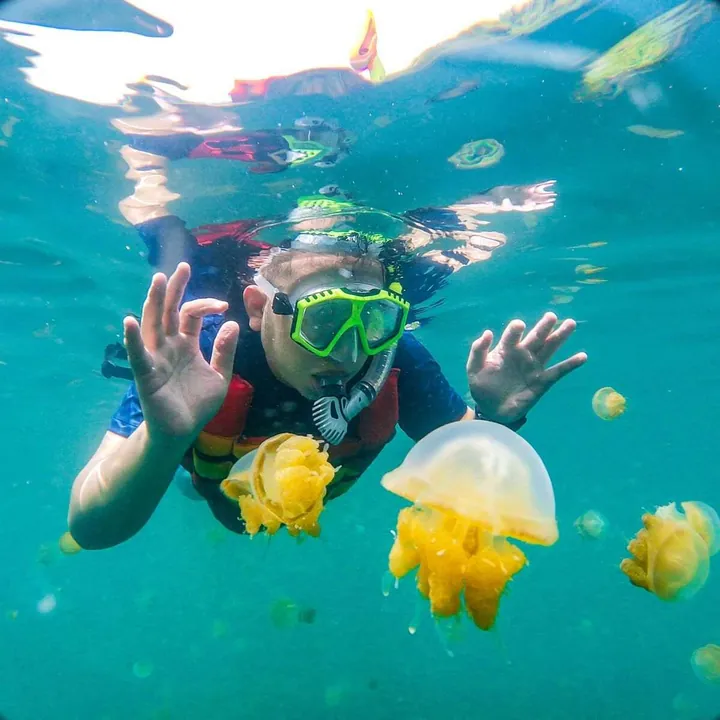 Kakaban
Sangalaki's close neighbour: a landlocked lake of stingless jellyfish, usually paired with the manta day.
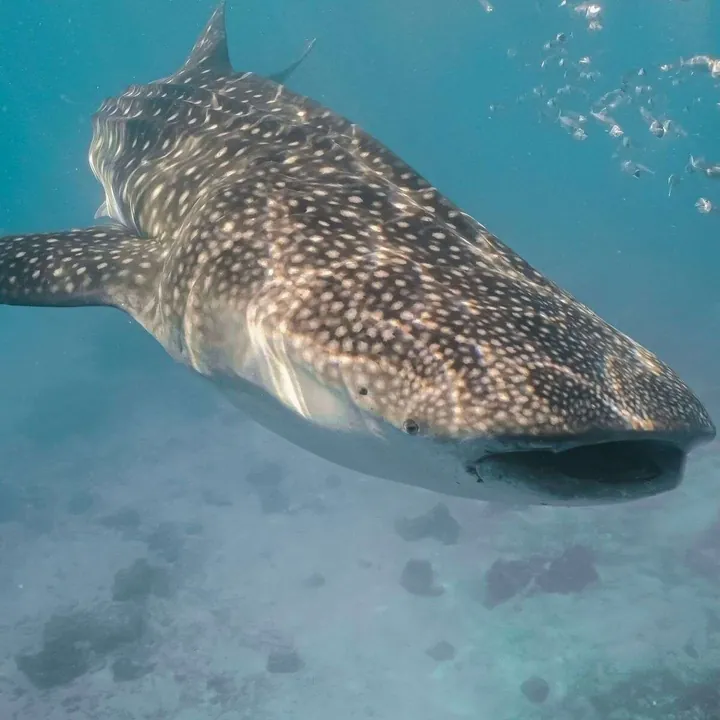 Talisayan
On the mainland coast, whale sharks gather around traditional fishing platforms: the early run on day 3 of the 4D3N.
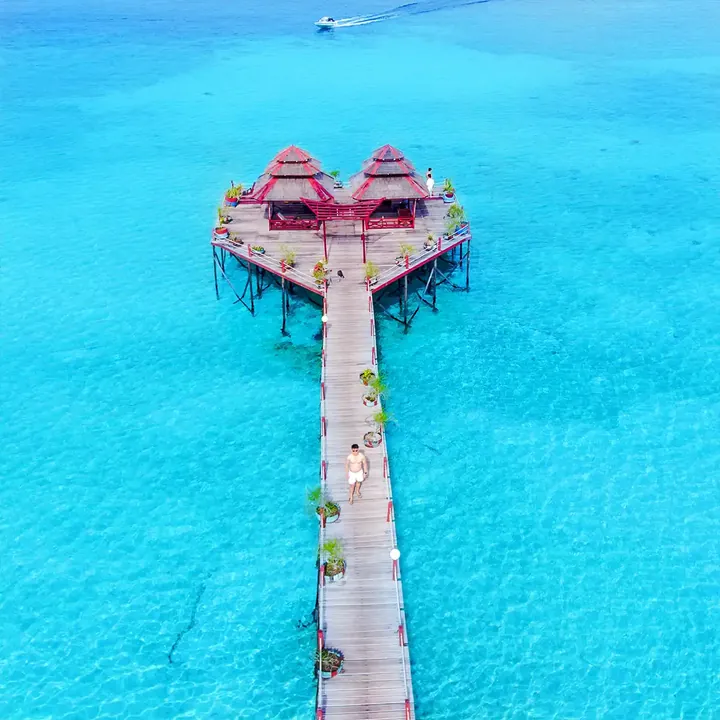 Maratua
Travellers who want to be close to the outer reefs can base themselves on Maratua.
Planning your own site list?
Trip costs
Published Indonesia Juara rates, nett. On the private trip, Standard tier: local guide and GoPro documentation; Premium: tour leader and local guide, drone, GoPro and mirrorless, with video editing.
Flights to Berau (BEJ) are not included. Scuba diving is not included. Rates as published on indonesiajuara.asia.
Answers
Yes. Snorkelling at Sangalaki needs no certification, only swimming ability and comfort in open water. Reef mantas feed near the surface there. Certified divers get a different view at the cleaning stations, roughly 8 to 20 metres down.
Keep exploring
Plan your manta trip
Send your travel month and group size, and we confirm the trip that puts you at Sangalaki and Manta Point.