activities

activities
activities — Derawan Archipelago, Berau, East Kalimantan

Updated: August 2026

The main activities in the Derawan Islands are scuba diving, snorkelling and close-range wildlife encounters with manta rays, green turtles, stingless jellyfish and whale sharks, spread across nine signature locations in the Berau regency of East Kalimantan. This category collects every activity guide on Derawan Island in one place, so you can decide what you want to do in the water before you decide which island to sleep on.

Every activity below is operated by Indonesia Juara, part of Juara Holding Group since 2015, on private departures of 3D2N and 4D3N from a single meeting point: Kalimarau Airport (BEJ) in Berau, East Kalimantan. The operating season runs April to November, the minimum group size is 2 travellers, and prices start from USD 281 per person depending on group size and service tier. Questions go to sales@indonesiajuara.asia.

The four activity guides in this category

Each guide below is a complete page. Read them in this order if you are planning your first trip: dive sites, then snorkelling spots, then the two wildlife encounters that most people travel here for.

Derawan dive sites

The Derawan dive sites guide maps the named underwater sites around Maratua, Sangalaki and Kakaban — including Big Fish Country, Turtle Traffic, the Blue Light Cave and the Maratua channel — and explains which are drift dives, which are wall dives, and which suit newly certified divers. Most recreational diving here happens between 5 and 30 metres, inside standard no-decompression limits.

Manta ray snorkelling and diving

The manta ray diving Derawan guide covers Sangalaki and Manta Point, where reef mantas with wingspans commonly over 3 metres feed and circle in shallow water. It explains why manta encounters at Sangalaki work for snorkellers as well as certified divers, how to behave around a feeding manta, and how the sighting odds shift with tide and plankton rather than with the calendar.

Green turtle nesting

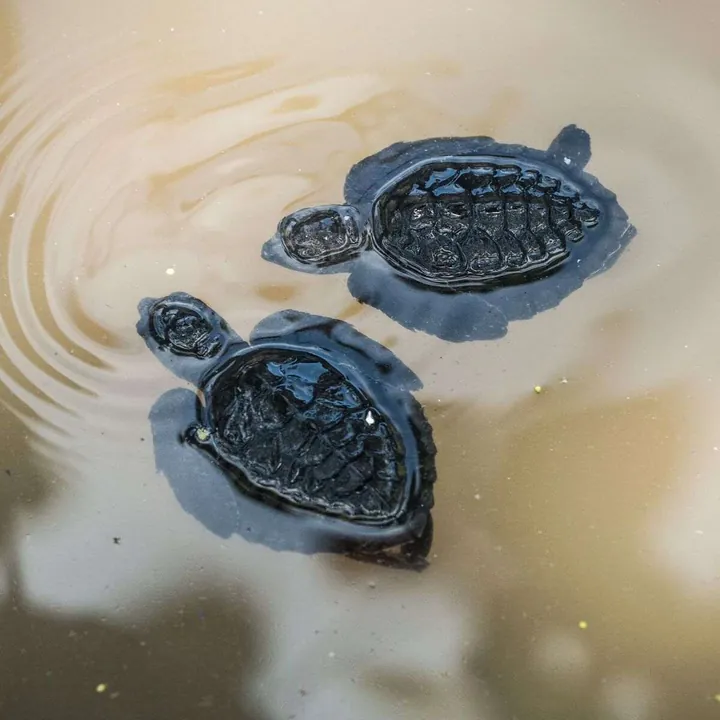
The green turtle nesting Derawan guide explains one of the reasons the archipelago is protected at all: its beaches are among Indonesia’s most important green sea turtle nesting grounds. The page covers when females come ashore, why nesting beaches are watched rather than walked on, what the rules are around lights and flash photography, and where turtles are reliably seen underwater on ordinary reef swims.

Derawan snorkelling spots

The Derawan snorkeling spots guide is the non-diver’s version of the same archipelago. It ranks the surface-level sites — the Kakaban jellyfish lake, the house reefs off Derawan itself, the shallow flats at Maratua and the sandbar at Pasir Gusung Sanggalau — for people who want to stay within the top 5 metres of water and still see the headline animals.

Which island do you visit for which activity?

Nine locations appear on the standard Derawan itinerary. This table is the fastest way to match an animal or an experience to a place.

LocationMain activityDiving certification needed?
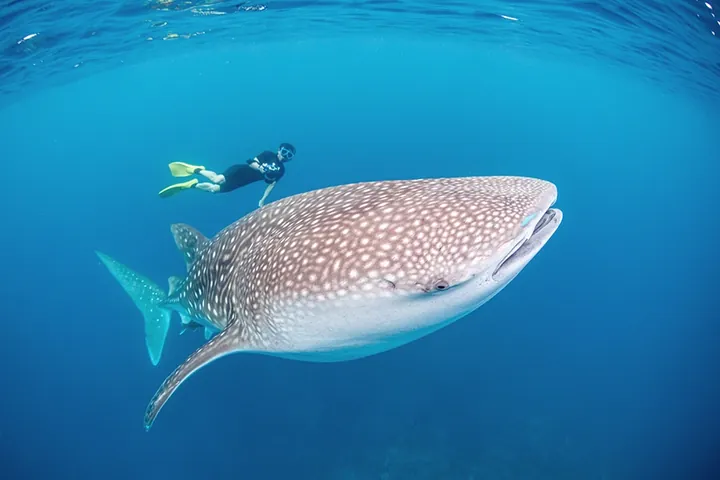
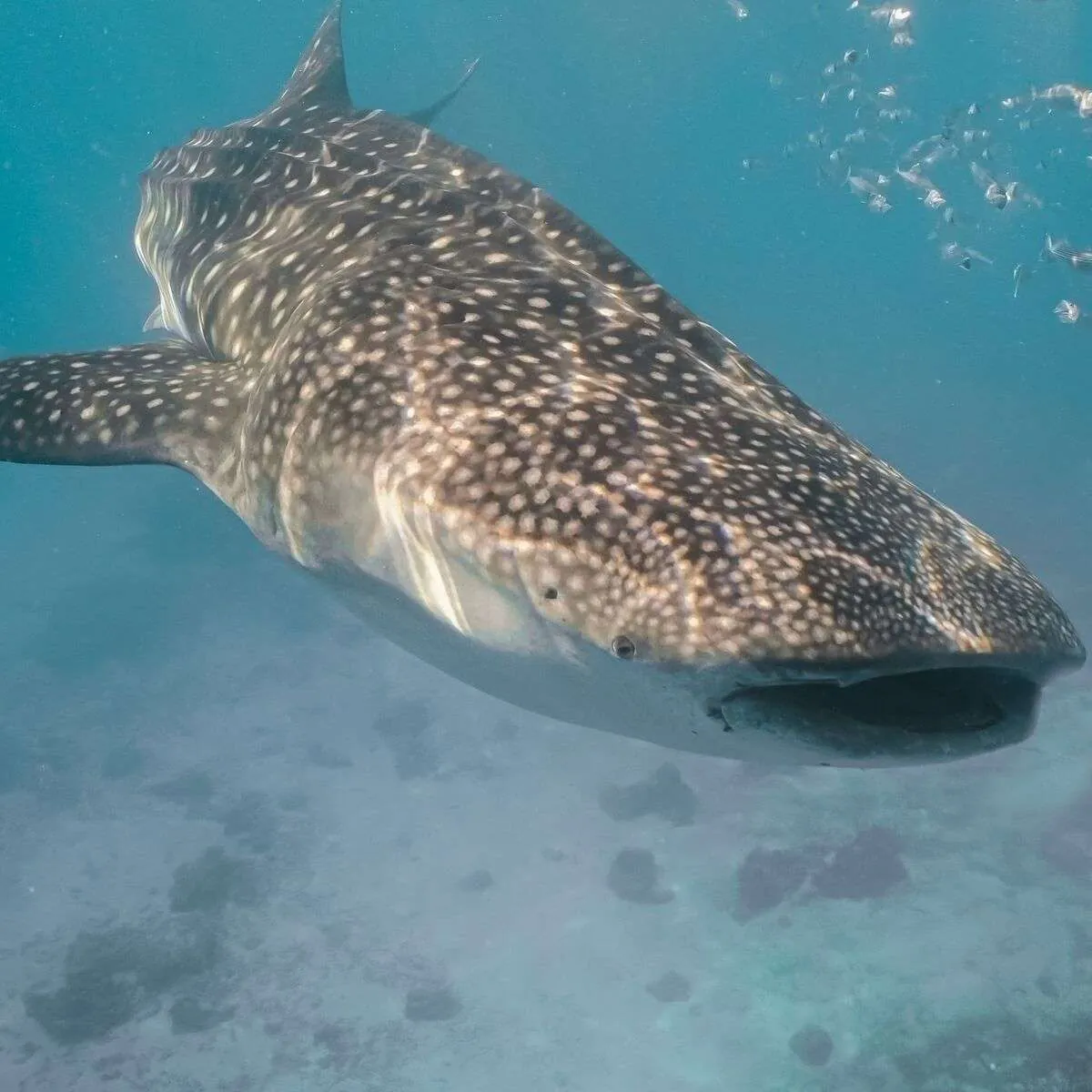
Talisayan whale shark tourSwimming beside whale sharks at the fishing platformsNo — snorkelling encounter
Sangalaki islandManta ray snorkelling and divingNo for snorkelling, yes for dives
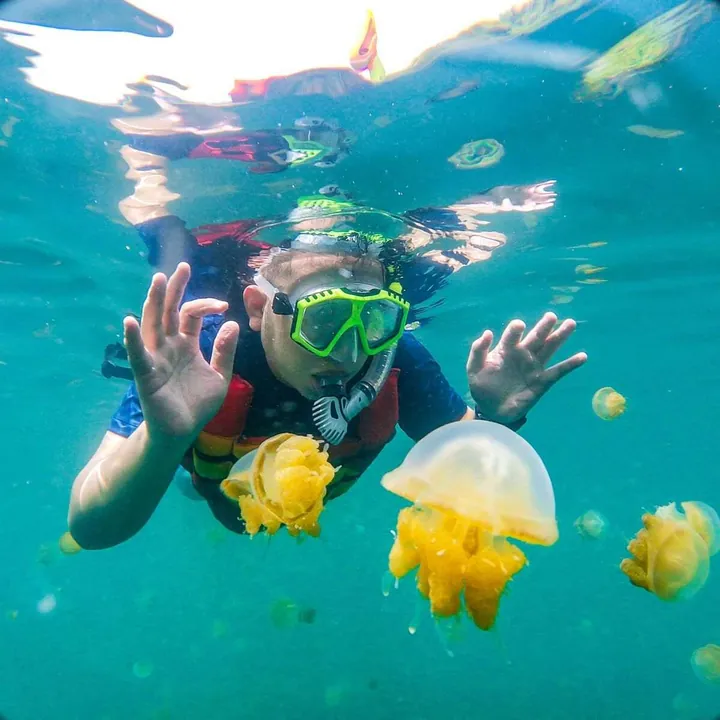
Kakaban islandStingless jellyfish lake snorkellingNo
Maratua islandWall and channel diving, reef snorkellingYes for the channel dives
Manta PointManta ray watching in shallow waterNo
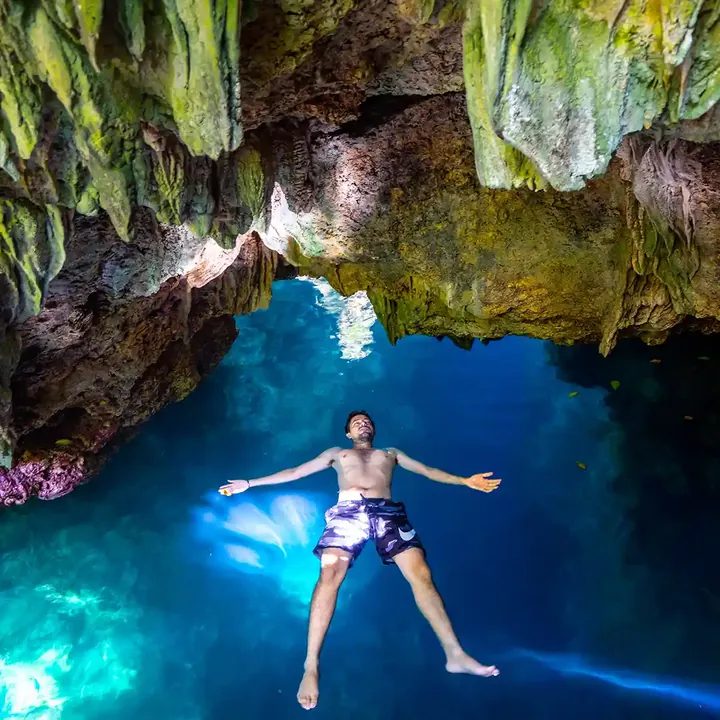
Goa Halo TabungSheltered cave pool swimNo
Laguna Kehe DaingHidden lagoon reached through a narrow rock gapNo
Pasir Gusung SanggalauSandbar stop, shallow snorkelling and photographyNo
Labuan CerminMirror lake: freshwater layer sitting over saltwaterNo

Snorkelling or diving: which one is right for your group?

Roughly two-thirds of what makes the Derawan Archipelago famous happens in the top 5 metres of water. Jellyfish, mantas, whale sharks and green turtles are all regularly seen by snorkellers, which is why mixed groups of divers and non-divers travel here together without splitting the itinerary.

QuestionSnorkellingScuba diving
Certification requiredNoneOpen-water level or above
Typical depthSurface to about 5 m5–30 m recreational range
Jellyfish lake at KakabanYes — the standard way to see itNot applicable in the lake
Manta rays at SangalakiFrequently seen from the surfaceYes, at the cleaning and feeding areas
Whale sharks at TalisayanYes — the standard way to see themNot required
Wall and channel sites at MaratuaLimitedYes — the main reason divers come

When can you do these activities?

The published Derawan season runs from April to November — eight months of the year. Outside that window the archipelago sits in its wetter, rougher period, and open-sea crossings between Derawan, Sangalaki, Kakaban, Maratua and the Talisayan coast become less predictable. Because every activity in this category depends on a boat transfer, sea state matters more than rainfall. For month-by-month planning, sea conditions and the flight side of the trip, use the how to get to Derawan Islands guide and the Derawan via Berau route page.

What does an activity-led Derawan trip cost?

All Derawan activities are sold inside a private trip rather than as separate tickets, so the cost per person falls as the group grows. The figures below are the published per-person rates for the 3D2N and 4D3N private trip, in two service tiers. They are starting points, not fixed prices — the final quote depends on group size, tier, chosen accommodation and departure date.

Group sizeStandard tierPremium tier
2 peoplefrom USD 580 per personfrom USD 672 per person
3 peoplefrom USD 442 per personfrom USD 506 per person
4 peoplefrom USD 391 per personfrom USD 437 per person
5 peoplefrom USD 331 per personfrom USD 368 per person
6 peoplefrom USD 359 per personfrom USD 391 per person
7 peoplefrom USD 340 per personfrom USD 368 per person
8 peoplefrom USD 322 per personfrom USD 345 per person
9 peoplefrom USD 281 per personfrom USD 304 per person
10 peoplefrom USD 285 per personfrom USD 304 per person

To turn these activities into a booked itinerary, start with the Derawan island tour overview, then compare the Derawan diving package for certified divers, the Derawan snorkeling tour for surface-only groups, and the Derawan island hopping tour if you want to cover Kakaban and Sangalaki in the same run. Groups that would rather sleep on the water can read the Derawan liveaboard page instead, and anyone still choosing between formats should start at the Derawan trip planner.

How activities decide where you sleep

On a three or four day trip, the island you stay on sets how early you can be in the water. Accommodation used on these trips includes Reza Derawan Resort, Alfit VIP Borneo Cottage, Sienna Resort, Maratua Paradise Resort, Arasatu Villa, Pratasaba Resort and Seheku Paradise. The Derawan islands resort guide explains which of these sit closest to which activity, the Derawan dive resort page covers dive-focused stays, and Maratua Paradise Resort has its own page for travellers building the trip around Maratua’s walls and channel.

Frequently Asked Questions

What are the best activities in the Derawan Islands?

The four headline activities are diving the sites around Maratua, snorkelling the stingless jellyfish lake at Kakaban, meeting manta rays at Sangalaki and Manta Point, and swimming with whale sharks at Talisayan. Green turtle sightings happen almost incidentally on ordinary reef swims. A standard 3D2N or 4D3N private trip strings several of these together, plus stops such as Labuan Cermin, Laguna Kehe Daing and the Pasir Gusung Sanggalau sandbar.

Can you snorkel with the Kakaban jellyfish without a diving licence?

No certification of any kind is needed to snorkel in the Kakaban jellyfish lake — it is a surface activity in a landlocked marine lake. The jellyfish there have lost their functional sting, which is why swimming among them is possible at all. Guides ask visitors to enter gently, avoid fins that kick downward, and never lift the animals out of the water. Full detail sits on the Kakaban island guide.

When is the best time for diving and snorkelling in Derawan?

Derawan trips operate from April to November, an eight-month season set by sea conditions rather than by water temperature. Every activity in the archipelago requires an open-sea boat transfer between islands, so swell and wind decide the day more than rain does. Outside that window, crossings to Sangalaki, Kakaban and the Talisayan coast become unreliable, and itineraries can be cut short. Ask sales@indonesiajuara.asia before planning a departure near the season edges.

How much does a Derawan activity trip cost per person?

Published rates start from USD 281 per person for the private Derawan trip, and the price per person depends on how many travellers share the boat and which service tier you choose. A pair travelling alone pays from USD 580 per person in the standard tier, while a group of nine pays from USD 281. Premium tier runs higher at every group size. All figures cover the private trip package, not individual activity tickets.

Are Derawan activities suitable for non-divers and families?

Most of the archipelago’s signature encounters — jellyfish, mantas, whale sharks and turtles — are seen from the surface, so non-divers miss very little. That is what makes mixed groups practical: certified divers can take the Maratua wall and channel sites while everyone else snorkels the shallows, and the two groups meet again at the same sandbars and lagoons. The minimum group size for a private departure is 2 travellers.

Where do Derawan activity trips start?

Every Derawan trip begins at Kalimarau Airport (BEJ) in Berau, East Kalimantan, which is the single meeting point for the private trip. From there the journey continues overland and by boat into the archipelago, and the activity days run from whichever island you are based on. Travellers arriving through a different gateway should read the Derawan via Tarakan route page before booking flights, then confirm the plan by email.