Manta Ray Snorkelling

Manta Ray Snorkelling
Manta Ray Snorkelling — Derawan Archipelago, Berau, East Kalimantan

Updated: August 2026

Manta ray diving and snorkelling in Derawan happens at Sangalaki Island, a small sand-fringed island inside the Derawan Archipelago where reef manta rays gather to feed on plankton and visit cleaning stations. Indonesia Juara runs manta encounters as part of its private Derawan trips between April and November, departing from Kalimarau Airport (BEJ) in Berau, East Kalimantan, with prices from USD 281 per person depending on group size and tier.

This page explains where the manta rays are, when to come, how snorkelling differs from diving on the same site, what a manta day actually looks like inside a 3D2N or 4D3N itinerary, and what the trip costs. Every price and destination below comes from live Indonesia Juara trip data — nothing here is a guess. For the full range of in-water experiences in the archipelago, see the Derawan activities category.

Sangalaki is the manta ray capital of the Derawan Archipelago

Sangalaki is the island the entire regional manta reputation is built on. It sits south-west of Maratua and west of Kakaban, and the shallow, plankton-rich water around it draws reef manta rays close enough to the surface that snorkellers — not only certified divers — regularly see them. That single fact is why Derawan is one of the very few places in Indonesia where a non-diver and a diver can have the same headline wildlife encounter on the same morning.

Manta encounters here happen in two distinct ways. The first is surface feeding: mantas cruise slowly with their cephalic fins unrolled, mouths open, sweeping plankton from the top few metres of water. Snorkellers see this from the surface, no certification and no tank required. The second is a cleaning station visit, where mantas hover over a coral bommie while small wrasse and butterflyfish pick parasites from their skin and gills. Cleaning stations sit deeper — typically in the 8 to 20 metre band — which is scuba territory. Manta Point, one of the nine destinations on the Indonesia Juara private trip roster, is the named site most trips work.

Reef manta rays reach roughly 3 to 4 metres across the wings, occasionally more. They have no stinging barb, no teeth that concern a human, and no interest in swimmers. They are, however, easily displaced by bad in-water behaviour — which is why the etiquette section further down is not decoration. Full island detail lives on the Sangalaki Island page, and the wider site list is on Derawan dive sites.

Manta season in Derawan runs from April to November

Indonesia Juara operates Derawan private trips from April to November. That eight-month window is the practical manta season, because it lines up with the calmer, drier part of the East Kalimantan year — the period when small-boat crossings between Derawan, Sangalaki, Kakaban and Maratua are comfortable and reliable rather than dictated by the swell.

PeriodTrip operationsWhat it means for manta encounters
April – MaySeason opensSeas settling after the wet months; fewer visitors on site, good early-season conditions
June – AugustPeak operating monthsMost stable crossings and the busiest booking period — reserve accommodation early
September – NovemberSeason closesStill fully operational; a good window for travellers who want quieter boats
December – MarchOutside the operating windowTrips are not scheduled; stronger winds and higher waves make open crossings unreliable

Important honesty note: manta rays are wild animals. Nobody — no operator, no resort, no dive centre — can guarantee a sighting on a given day. What a well-planned itinerary can do is put you in the right water, at the right site, at the right time of year, with enough hours in the schedule to try more than once. Booking a 4D3N itinerary instead of 3D2N is the single most effective way to raise your odds, because it buys you a second attempt at the manta grounds.

Snorkelling or diving with manta rays: which one suits you?

Most travellers assume manta encounters require a scuba certification. In Derawan they do not. Here is the honest comparison so you can decide before you book.

FactorManta snorkellingManta diving
Certification neededNone — swimming ability and comfort in open waterOpen Water certification or higher
Typical depthSurface to about 5 mRoughly 8–20 m at cleaning stations
Best encounter typeSurface feeding, backlit silhouettes, long viewing timeCleaning-station behaviour, mantas hovering in one place
SuitsFamilies, mixed-ability groups, photographers shooting from aboveCertified divers, underwater photographers wanting eye-level frames
Included in the standard private tripYes — snorkelling is the default water activityQuoted separately; tell the team at enquiry stage

If your group mixes divers and non-divers, say so in your first email. The private-trip format means the boat can drop snorkellers on the shallow feeding line while certified divers work the deeper cleaning station on the same site — a flexibility that fixed group tours rarely offer. Divers should also read the Derawan diving package page, while non-divers will get more from the Derawan snorkelling tour format.

How the manta day fits into a 3D2N or 4D3N private trip

Manta rays are not sold as a standalone half-day product in Derawan. The archipelago is spread out, boat time is the main cost driver, and it makes no operational sense to run a boat to Sangalaki and back for one activity. Instead, the manta grounds sit inside a multi-island private trip that covers nine destinations in total.

The full destination roster on the Indonesia Juara private trip is: Talisayan for whale sharks, Maratua, Kakaban and its jellyfish lake, Sangalaki for manta rays, Goa Halo Tabung, Manta Point, Pasir Gusung Sanggalau, Laguna Kehe Daing, and Labuan Cermin. A 3D2N itinerary covers a subset; the 4D3N adds the breathing room that makes a second manta attempt possible.

In practice, a manta day usually pairs Sangalaki with Kakaban Island and its stingless jellyfish lake, because the two islands are close neighbours and the sea conditions that suit one suit the other. Many groups also fold in green turtle encounters, since the same waters are turtle-dense — see green turtle nesting in Derawan for the conservation context. If you want the widest island coverage in the fewest days, the Derawan island hopping tour is the format to look at.

How much does a manta ray trip in Derawan cost?

Prices below are per person in USD for the Private Trip Derawan (3D2N / 4D3N), which includes the Sangalaki manta grounds. Two tiers are available: standard and premium. The per-person rate falls as the group grows, because boat and guide costs are shared. Minimum group size is 2 people.

Group sizeStandard (per person)Premium (per person)
2 peoplefrom USD 580from USD 672
3 peoplefrom USD 442from USD 506
4 peoplefrom USD 391from USD 437
5 peoplefrom USD 331from USD 368
6 peoplefrom USD 359from USD 391
7 peoplefrom USD 340from USD 368
8 peoplefrom USD 322from USD 345
9 peoplefrom USD 281from USD 304
10 peoplefrom USD 285from USD 304

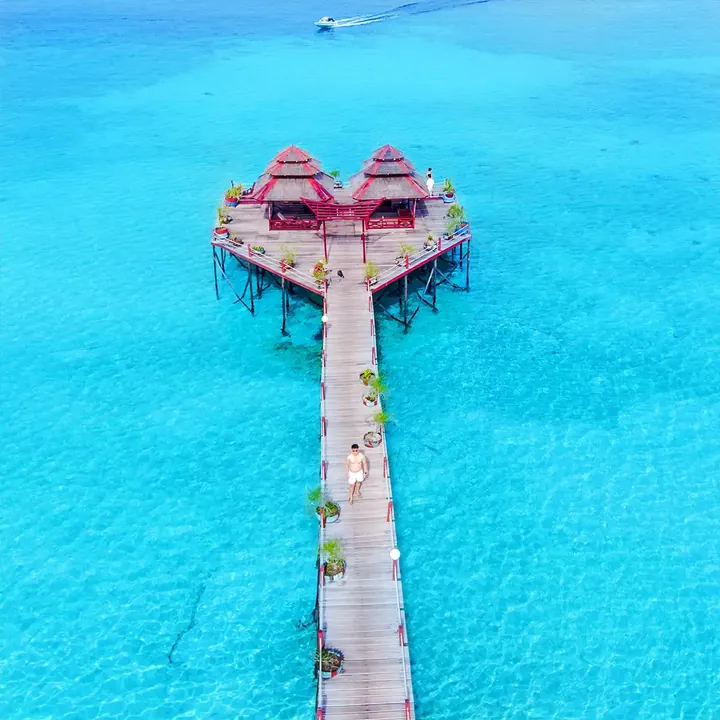
These are indicative starting rates, not fixed prices. The final figure depends on your group size, the tier you choose, your travel dates, the exact islands in your itinerary, and which property you stay in. Standard and premium differ mainly in accommodation: the properties Indonesia Juara works with in the archipelago are Reza Derawan Resort, Alfit VIP Borneo Cottage, Sienna Resort, Maratua Paradise Resort, Arasatu Villa, Pratasaba Resort and Seheku Paradise. Which one you get depends on tier and availability — the where to stay in the Derawan Islands page explains the differences.

What the quoted rate does and does not cover

  • Covered: the accommodation, boat transfers between the islands on your itinerary, and guiding for the destinations confirmed in your booking, starting from the meeting point at Kalimarau Airport.
  • Not covered: flights to and from Kalimarau Airport (BEJ). The trip begins and ends at the airport, so your air ticket is always separate.
  • Quoted separately: scuba diving — tanks, weights, certified dive guiding and site fees. Snorkelling is the default water activity in the published rate.
  • Confirm in writing: ask for the itemised inclusion list on your quotation before paying anything. If a component is not written on the quotation, treat it as not included.

To request a quotation with your dates and group size, email sales@indonesiajuara.asia. Indonesia Juara is part of Juara Holding Group and has operated Indonesian island trips since 2015.

How to reach the manta grounds from Kalimarau Airport

Every Derawan private trip starts at Kalimarau Airport (BEJ) in Berau, East Kalimantan — that is the contractual meeting point, and it is where your guide meets you. Kalimarau connects to the rest of Indonesia through the main domestic hubs, so most international travellers fly in via Jakarta, Surabaya or Balikpapan.

From Kalimarau, the route runs overland to the coast and then by boat into the archipelago. Sangalaki is not a place you reach independently on a whim: it is an open-water crossing from the inhabited islands, and the boat is arranged as part of the trip. Travellers routing through the northern gateway instead should read Derawan via Tarakan; the standard route is covered on how to get to the Derawan Islands and in more detail on Derawan via Berau (Kalimarau).

Manta ray etiquette that keeps the encounter alive

Manta aggregation sites collapse when they are handled badly. Mantas that are chased leave, and mantas that leave do not come back on schedule. These rules are what separate a site that still works in ten years from one that does not.

  • Never touch a manta. Their skin carries a protective mucus layer; a hand strips it and opens the animal to infection.
  • Do not chase. Stay still, stay horizontal, and let the animal choose the distance. Mantas are curious and will often approach a calm swimmer.
  • Do not swim over the top of a manta. Blocking the light above a feeding or cleaning manta is the fastest way to push it off the site.
  • Keep clear of cleaning stations. Divers should settle at a distance and stay low. A manta interrupted mid-clean simply leaves.
  • No flash photography. Use available light — the surface silhouettes are better anyway.
  • Enter the water quietly. Slide in rather than jumping when mantas are already at the surface.

What else you see on the same water as the manta rays

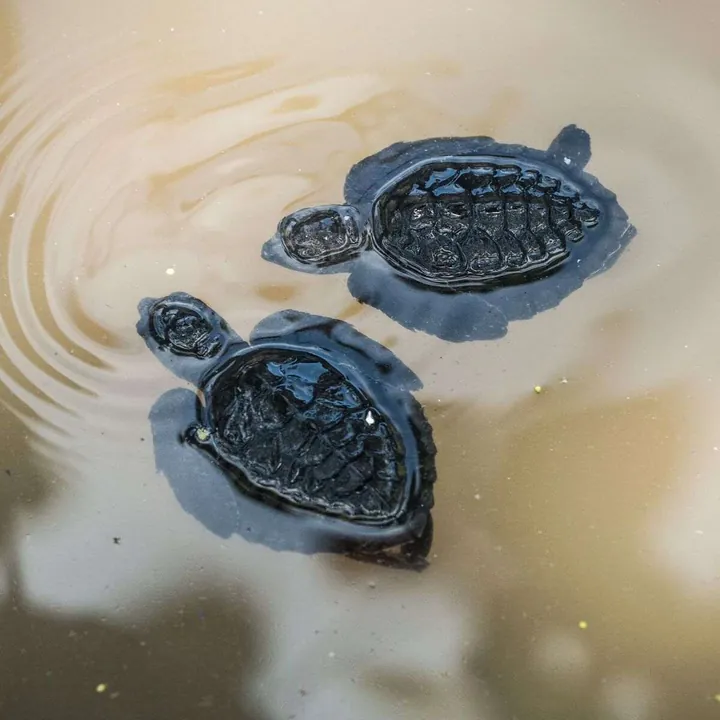
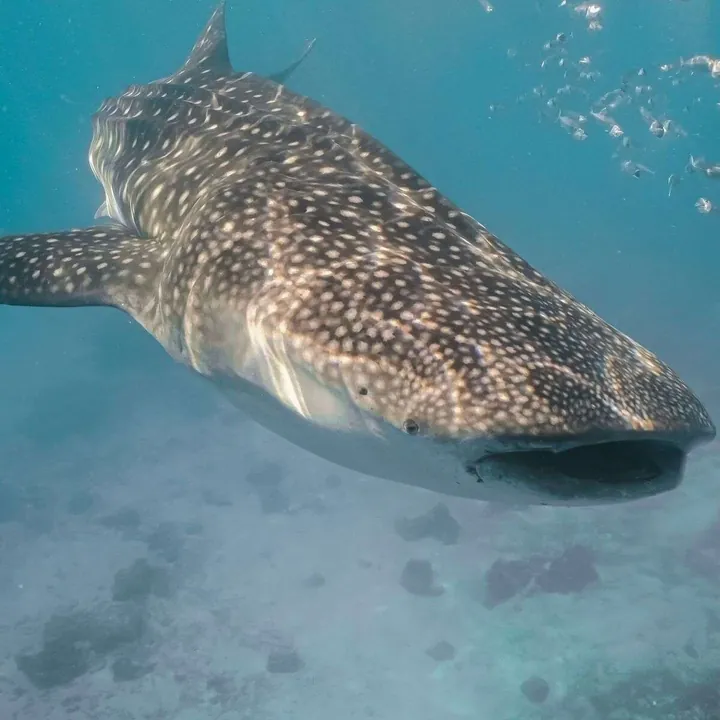
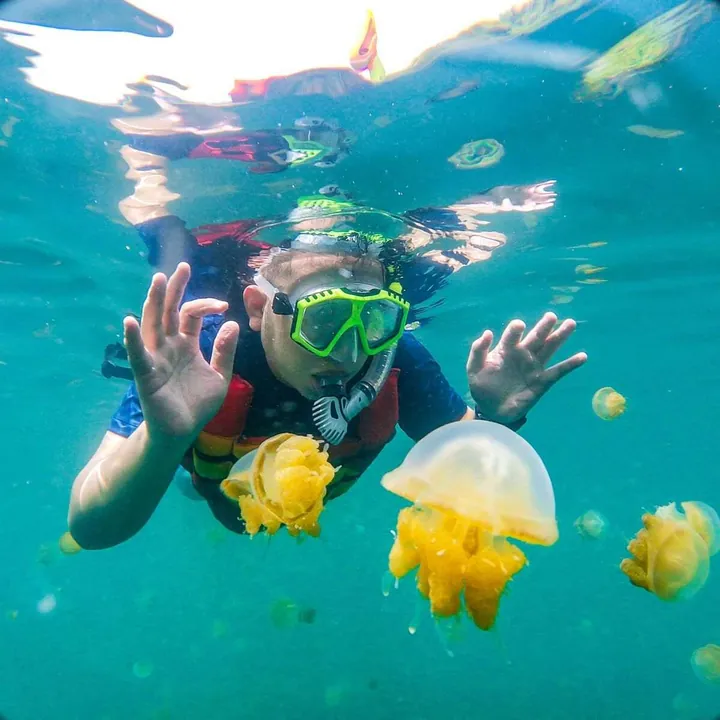
The manta grounds are one node in an unusually dense wildlife map. On the same multi-day itinerary, groups see stingless jellyfish in the landlocked lake on Kakaban, green sea turtles in numbers that surprise first-time visitors, and — on the mainland coast at Talisayan — whale sharks that gather around traditional fishing platforms. That combination is the reason Derawan is treated as a single trip rather than a set of separate excursions.

If wildlife is the whole point of your trip, budget four days rather than three. The archipelago rewards patience: manta rays at Sangalaki, jellyfish at Kakaban, turtles almost everywhere, and whale sharks at Talisayan are four different animals on four different schedules, and a compressed itinerary forces you to choose. Snorkellers planning their own site list should also read Derawan snorkelling spots, and travellers wanting to sleep close to the outer reefs should look at Maratua Island.

Frequently Asked Questions

Can you snorkel with manta rays in Derawan without a diving licence?

Yes — manta ray snorkelling at Sangalaki requires no scuba certification at all, only swimming ability and comfort in open water. Reef mantas in this area feed near the surface, sweeping plankton with their mouths open in the top few metres, which puts them within easy view of a snorkeller. Certified divers get a different experience at the deeper cleaning stations, roughly 8 to 20 metres down, where mantas hover to be cleaned by small reef fish. Mixed groups of divers and non-divers can work the same site on the same trip.

When is manta season in the Derawan Islands?

Indonesia Juara operates Derawan private trips from April to November, and that eight-month window is the practical manta season. It matches the calmer, drier part of the East Kalimantan year, when open-water crossings between Derawan, Sangalaki, Kakaban and Maratua are reliable rather than weather-dependent. From December to March trips are not scheduled, because stronger winds and higher waves make small-boat crossings to the outer islands unpredictable. June to August is the busiest operating period, so accommodation should be reserved well ahead.

How much does manta ray diving in Derawan cost per person?

The Private Trip Derawan that includes the Sangalaki manta grounds starts from USD 281 per person for a group of nine on the standard tier, and from USD 580 per person for a pair. Rates fall as group size rises because boat and guide costs are shared across more travellers, and the premium tier costs more because of the accommodation used. These are indicative starting figures, not fixed prices — the final quotation depends on your dates, group size, tier and exact island list. Scuba diving is quoted separately from the snorkelling-based rate.

Where exactly do you see manta rays in the Derawan Archipelago?

Sangalaki Island is the primary manta ray location in the Derawan Archipelago, with Manta Point the named site most trips work. Sangalaki sits west of Kakaban and south-west of Maratua, and the plankton-rich shallows around it draw reef manta rays close to the surface. The island is reached by boat as part of a multi-island itinerary rather than independently. Because the same waters hold green sea turtles in high numbers, a manta morning at Sangalaki almost always produces turtle sightings too.
Are manta rays in Derawan dangerous to swimmers?

Reef manta rays have no stinging barb and pose no threat to swimmers or divers. They are filter feeders that eat plankton, they have no teeth capable of harming a human, and they show no aggression towards people in the water. The genuine risk runs the other way: mantas are easily displaced by swimmers who chase them, touch them, or block the light above them. Following basic etiquette — stay still, stay below or beside the animal, never touch — protects both the encounter and the site’s long-term viability.

Is three days enough to see manta rays in Derawan?

A 4D3N itinerary is significantly better than 3D2N for manta rays, because it buys a second attempt at the Sangalaki grounds. Manta rays are wild animals and no operator can guarantee a sighting on any given day, so the realistic strategy is to schedule more than one opportunity. A three-day trip covers a subset of the nine destinations on the roster and leaves no margin if weather or sea conditions cancel a crossing. Groups whose main goal is wildlife should budget four days.

Ready to plan your manta trip? Email sales@indonesiajuara.asia with your travel month, group size and whether you want snorkelling only or snorkelling plus scuba, and the team will build the itinerary around the manta grounds. You can also start from the full Derawan trip overview or browse every water activity in the activities section.