Derawan Snorkelling Tour

Derawan Snorkelling Tour
Derawan Snorkelling Tour — Derawan Archipelago, Berau, East Kalimantan

Updated: August 2026

A Derawan snorkeling tour is a private, guided island-hopping trip through the Derawan Archipelago in Berau Regency, East Kalimantan, built around nine surface-level sites including Kakaban’s stingless jellyfish lake, Sangalaki’s manta ray shallows and the green turtle grounds off Derawan itself. Indonesia Juara runs it as a Private Trip Derawan in 3D2N and 4D3N formats, starting from USD 285 per person, with a minimum of 2 travellers and a meeting point at Kalimarau Airport (BEJ) in Berau.

A Derawan snorkelling tour is a private boat charter, not a shared group departure

Every departure on this page is private. That means the boat, the guide and the daily running order belong to your group alone — there is no shared manifest, no fixed departure day you have to fit around, and no waiting for a minimum number of strangers to fill the vessel. The trip runs with as few as 2 people and is quoted in tiers up to 10 people, which is why the per-person price falls sharply as the group grows.

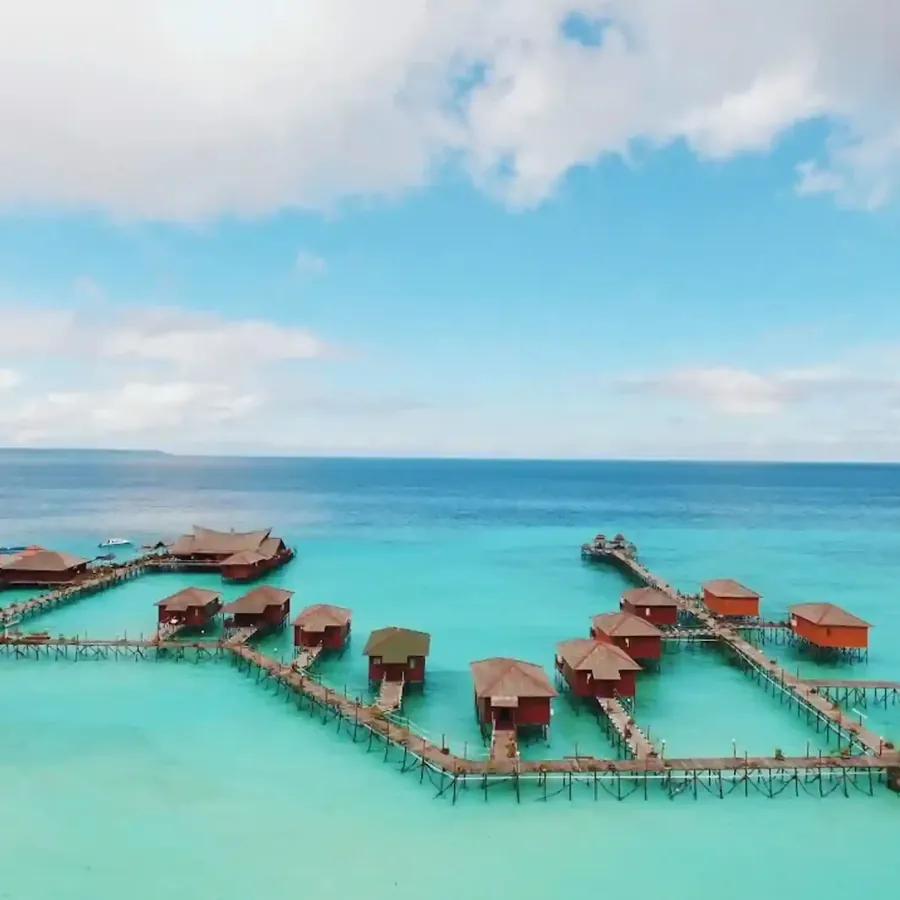
The archipelago sits off the east coast of Borneo in the Sulawesi Sea, and everything on the itinerary is reached by boat from a single base. That geography is what makes Derawan unusual for snorkellers: manta rays, stingless jellyfish, green turtles and whale sharks are not spread across four different provinces here — they are all within reach of the same multi-day charter. The full set of destinations is covered in the wider Derawan island hopping tour, and this snorkelling version keeps every stop at surface level so that non-divers lose nothing.

Derawan snorkelling tour price: USD per person by group size

Pricing is quoted per person and moves with two variables only — how many people are in your group, and whether you take the standard or premium accommodation tier. The figures below are the current starting rates. They are not fixed retail prices: the final quotation depends on your exact travel dates, the accommodation actually available on those dates, and the trip length you choose.

Group sizeStandard tier (from, per person)Premium tier (from, per person)
2 peoplefrom USD 580from USD 672
3 peoplefrom USD 442from USD 506
4 peoplefrom USD 391from USD 437
5 peoplefrom USD 331from USD 368
6 peoplefrom USD 359from USD 391
7 peoplefrom USD 340from USD 368
8 peoplefrom USD 322from USD 345
9 peoplefrom USD 281from USD 304
10 peoplefrom USD 285from USD 304

Two things in that table deserve an honest explanation. First, the curve is not perfectly smooth — a group of 6 pays slightly more per head than a group of 5, and a group of 10 slightly more than a group of 9. That is because boat capacity and room configuration change at certain thresholds, and a second vessel or an extra room can be triggered by a single additional traveller. Second, the gap between standard and premium is modest, usually USD 20 to USD 95 per person, because the difference is accommodation quality rather than a different boat or a different set of islands.

What the price covers and what it does not

The quoted rate is built around the ground component of the trip: the private boat and crew for your snorkelling days, land and sea transfers from the meeting point onward, accommodation at one of the properties listed further down this page, and a guide who runs the water sessions.

Sitting outside the quoted rate:

  • Flights. The trip begins at Kalimarau Airport (BEJ). Getting yourself to Berau — usually via Jakarta, Balikpapan or Tarakan — is arranged and paid separately. Routing options are explained on how to get to Derawan Islands.
  • Scuba diving. This is a surface-level trip. Tanks, weights and certified dive guiding are a different product entirely — see the Derawan diving package if you want the reef at depth as well.
  • Travel insurance, personal spending, tips and anything bought on the islands.
  • Any conservation levy or local entrance fee collected on arrival at a specific site. These vary and are confirmed in writing on your quotation rather than assumed here.

If an inclusion matters to you, ask for it to be written into the quotation before you pay. A private trip is negotiable in a way a fixed group departure is not.

Where you snorkel: the nine sites on a Derawan snorkelling tour

SiteWhat you see at the surface
KakabanThe jellyfish lake — four species of stingless jellyfish in a landlocked marine lake
SangalakiManta rays feeding in shallow water; the island is a green turtle nesting ground
Manta PointThe dedicated manta cleaning and feeding area off Sangalaki
MaratuaThe largest island of the group — reef walls, turtles and clear channel water
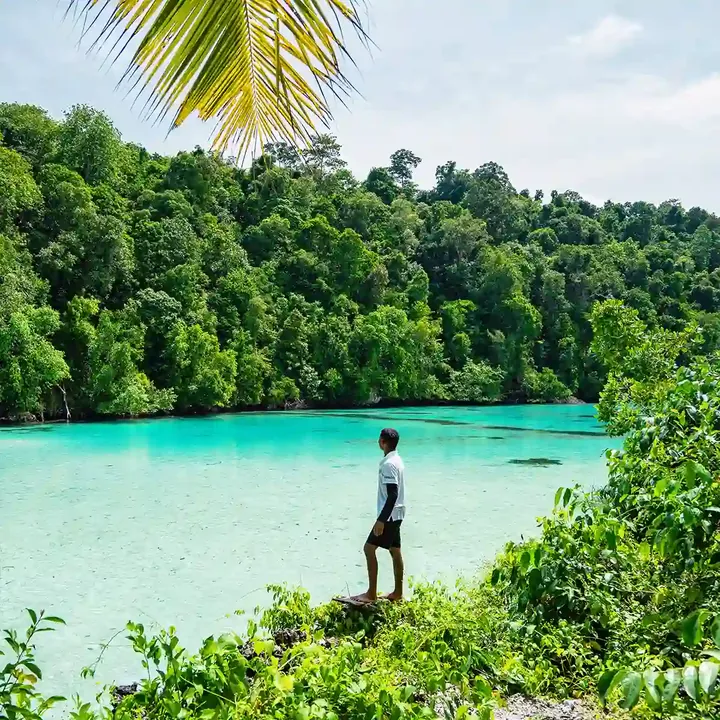
Laguna Kehe DaingA hidden lagoon on Maratua reached through a narrow rock channel
Goa Halo TabungA cave-and-pool formation on Maratua
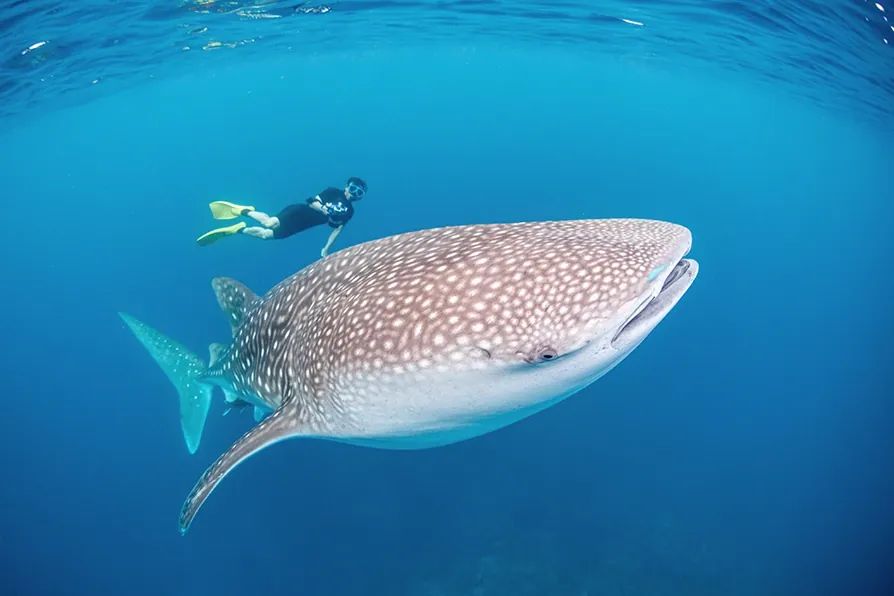
TalisayanWhale sharks around the mainland fishing platforms
Pasir Gusung SanggalauA sandbar that appears and disappears with the tide
Labuan CerminThe mirror lake — a freshwater layer sitting visibly on top of saltwater

Not every departure reaches all nine. A 3D2N trip covers the core cluster; a 4D3N trip has the extra day needed to add the mainland stops, because Talisayan whale shark tour and Labuan Cermin are on the Berau coast rather than in the archipelago and need their own travel time. The running order is confirmed on your itinerary, since boat timing is set by tide and weather, not by a printed schedule.

The Kakaban snorkelling tour is the reason most people book

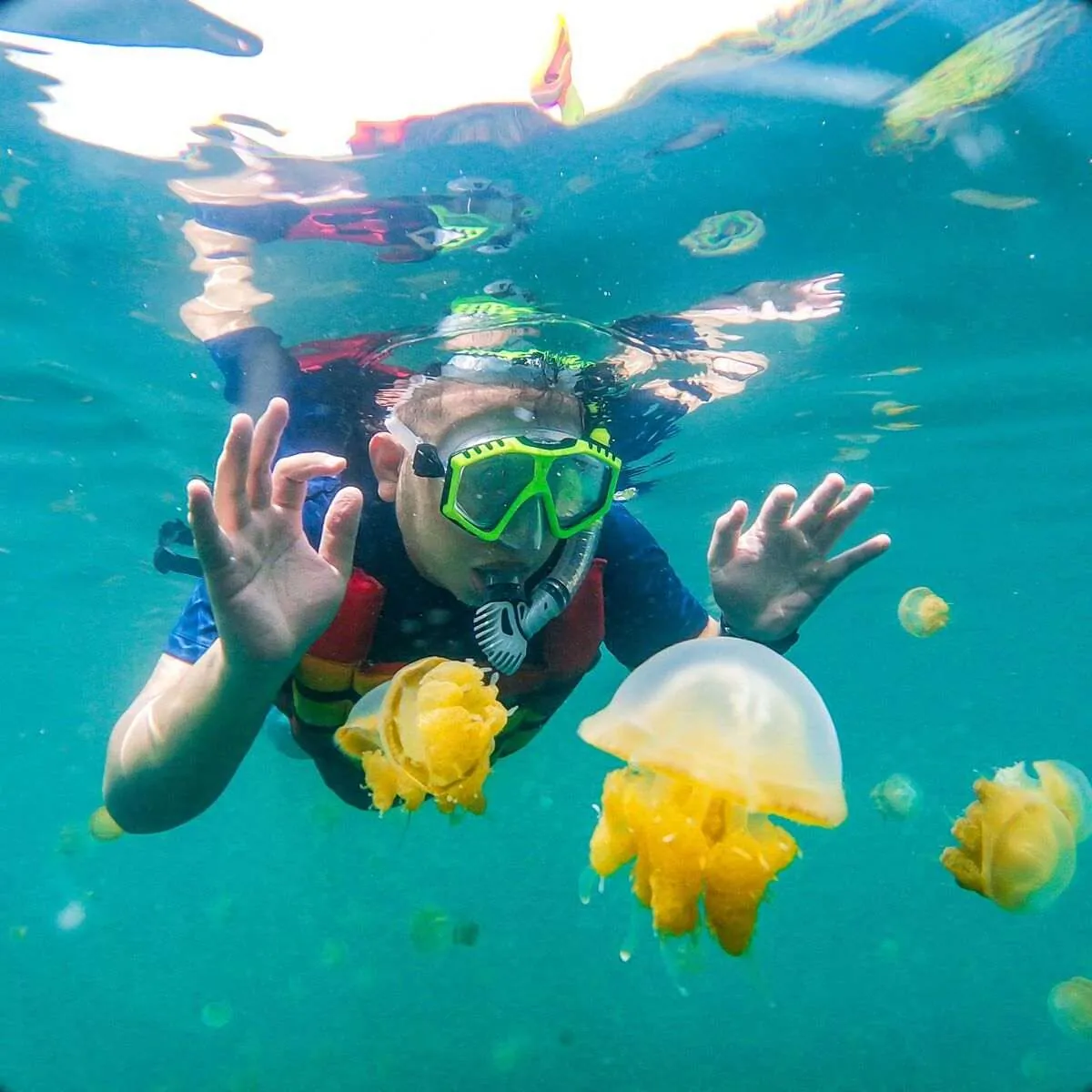
Kakaban Lake is a landlocked body of seawater trapped inside the island, and it holds stingless jellyfish — one of a very small number of marine lakes on Earth where you can swim among jellyfish without risk of a sting. You float; they drift around you. The water is warm, shallow enough to snorkel comfortably, and there is no current to fight. It is the single most photographed thing in the archipelago and the reason a Kakaban snorkeling tour is treated as non-negotiable on almost every itinerary.

Practical points that matter in the water: sunscreen and insect repellent are washed off into the lake and damage the jellyfish, so rinse before entering. Do not stand on the lake bed. Do not lift a jellyfish out of the water, and never jump or dive in — the impact kills them. Fins are usually discouraged because the kick damages the animals. Full detail on the island, the lake ecology and access is on the Kakaban island page.

Sangalaki gives you manta rays without a scuba certificate

Sangalaki is the manta island. The rays feed on plankton close to the surface, which is exactly why manta ray snorkeling Sangalaki works as well as diving does here — you are looking down at animals that are already in the top few metres of water. Wingspans of several metres are routine, and encounters are from above rather than eye-level, which many snorkellers find more comfortable than a dive.

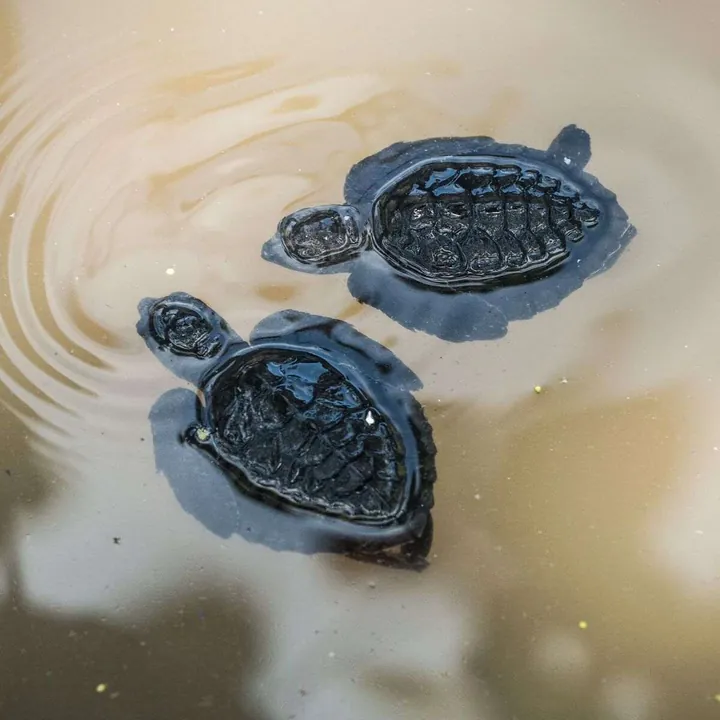
Sangalaki is also a green turtle nesting island, and the archipelago as a whole is one of Indonesia’s significant green turtle grounds. Turtles are encountered in the water on most snorkelling days around Derawan and Maratua; nesting itself is a shore activity with strict rules, covered on green turtle nesting Derawan. Everything about site selection, entry points and what is realistically visible at each stop is expanded on Derawan snorkeling spots.

3D2N or 4D3N: how many days a Derawan snorkelling tour needs

FormatRealistic coverageBest for
3 days / 2 nightsThe island cluster — Derawan, Kakaban, Sangalaki, Maratua and its lagoon and cave sitesTravellers on a tight schedule who want the jellyfish lake and the mantas
4 days / 3 nightsThe island cluster plus the mainland stops at Talisayan and Labuan CerminAnyone who wants whale sharks and the mirror lake in the same trip

If whale sharks are the reason you are travelling, take the 4D3N. Talisayan is a mainland departure with an early start, and squeezing it into three days means dropping something from the archipelago. If your priority is Kakaban and Sangalaki, 3D2N is enough and the shorter trip is meaningfully cheaper per person.

April to November is the snorkelling season in Derawan

The operating window for these trips runs April through November — eight months. Outside that window sea conditions on the crossings become unreliable, and a snorkelling trip that cannot leave the harbour is not a trip. Within the season, visibility and comfort are generally good across the archipelago, and the mid-season months are the busiest for accommodation, so the premium properties book out first.

Book early if you are travelling in a group of six or more. The per-person price advantage of a larger group only holds if the boat and the rooms are actually available on your dates, and in high season that is a genuine constraint rather than a sales line.

Getting to the meeting point at Kalimarau Airport

Every Private Trip Derawan starts at Kalimarau Airport (BEJ) in Berau, East Kalimantan. You fly in, you are met, and the transfer to the water is handled from there. Berau is the standard gateway and the one this trip is built around — the routing, connection timings and what to expect on arrival are detailed on Derawan via Berau.

Tarakan is the alternative entry point for some travellers depending on flight availability, and it changes the transfer structure rather than the trip itself. If your inbound flights land there instead, say so when you request a quotation so the ground plan is adjusted before you book, not after you arrive.

Where you stay between snorkelling days

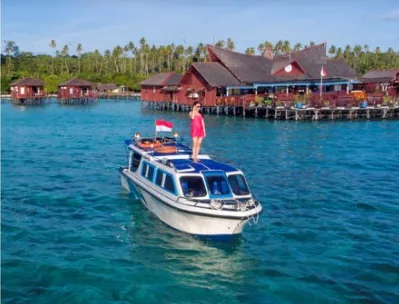
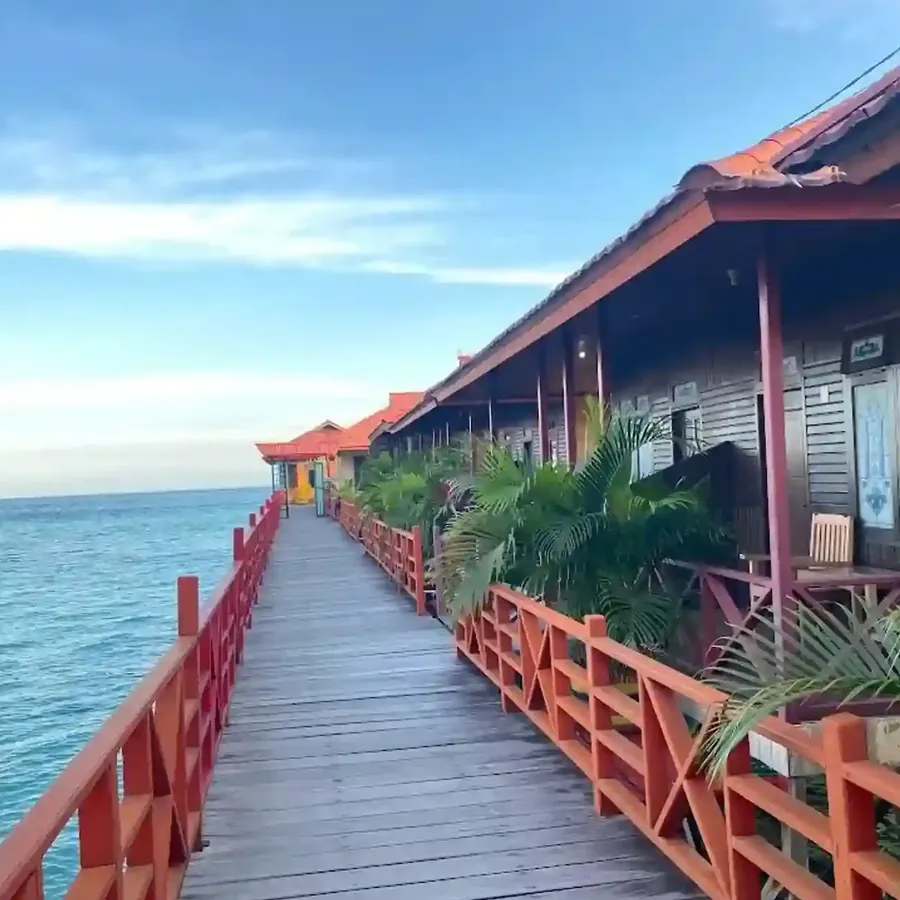
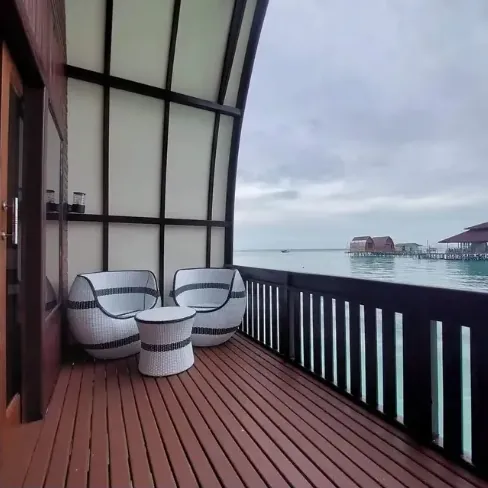
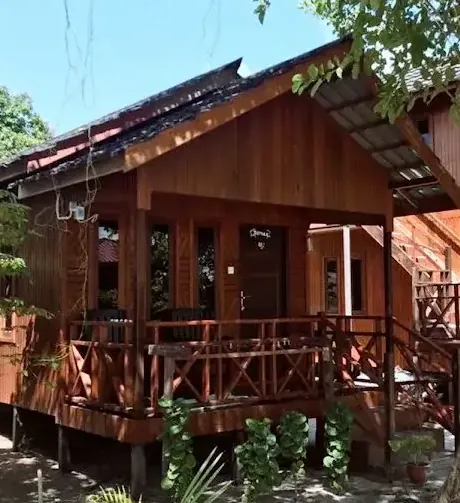
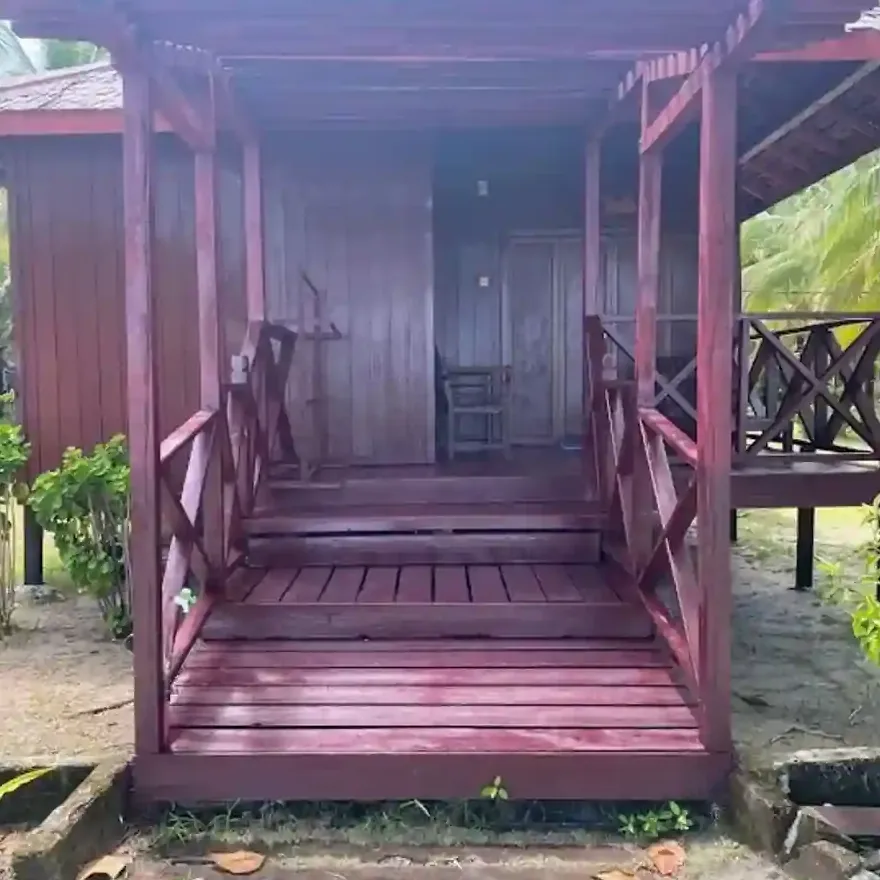
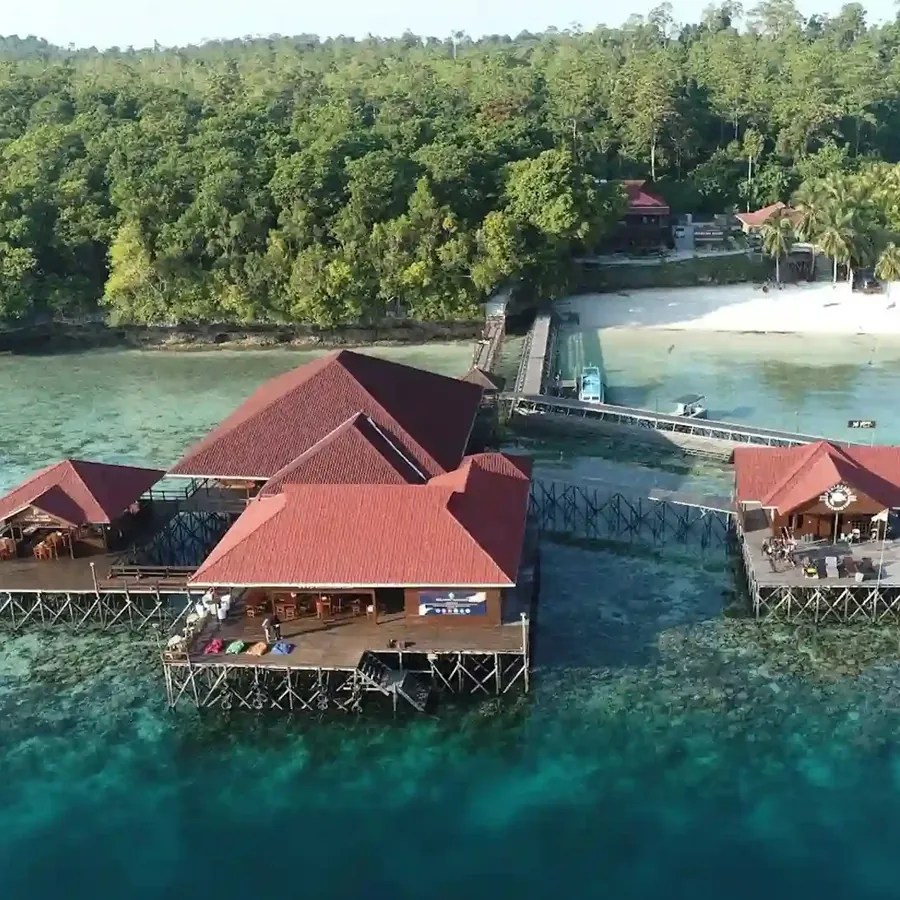
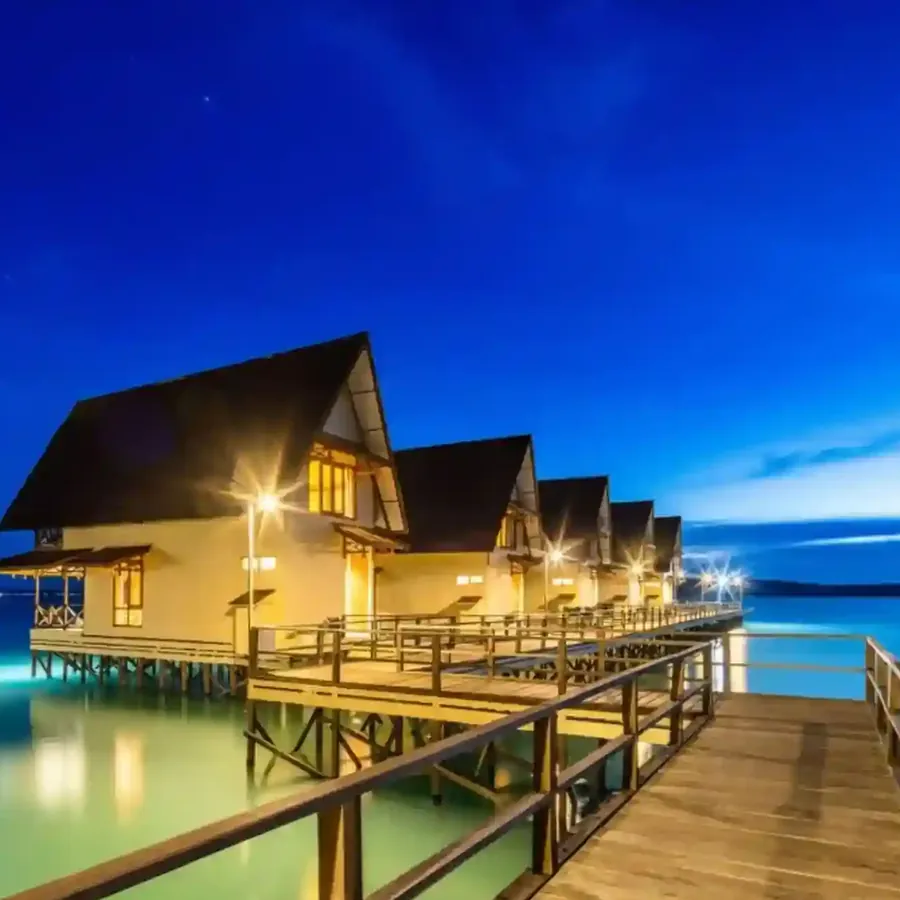
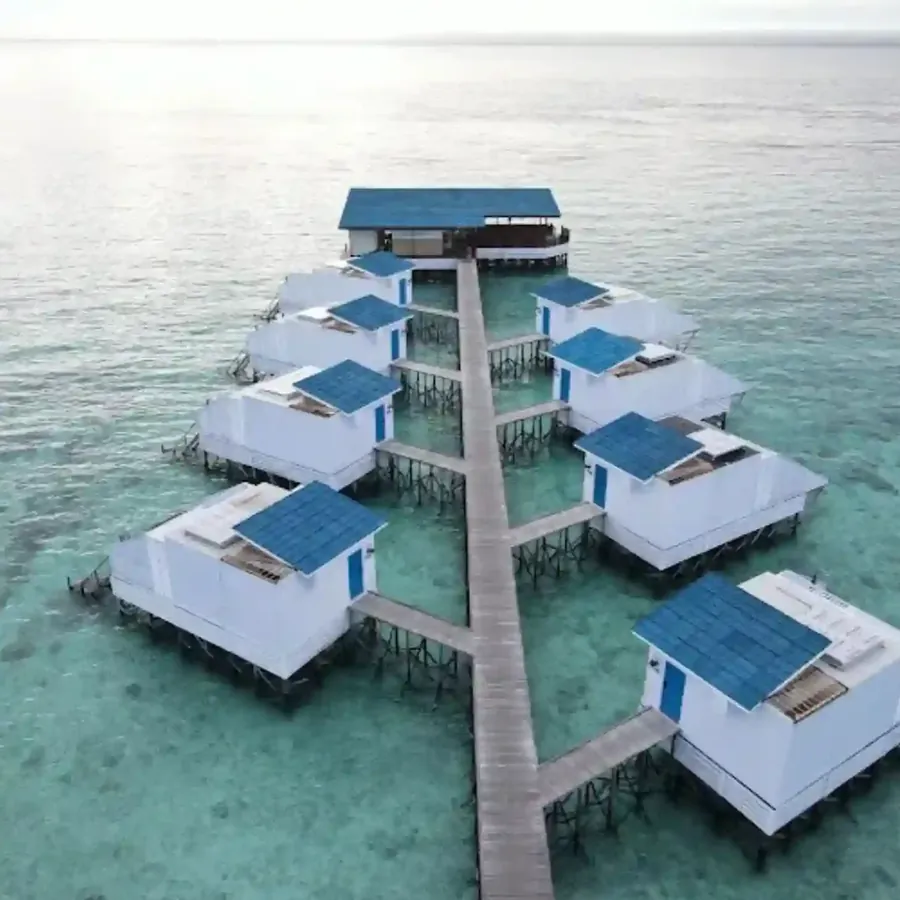
Accommodation is drawn from a set of properties across the archipelago and the mainland gateway, and which one you get depends on your tier, your group size and availability on your dates. The properties used are Reza Derawan Resort, Alfit VIP Borneo Cottage, Sienna Resort, Maratua Paradise Resort, Arasatu Villa, Pratasaba Resort and Seheku Paradise.

Standard tier and premium tier both draw from this set — the difference is which property and which room category, not a different class of trip. Your confirmed property is named on your quotation before payment, so you know exactly where you are sleeping. For a fuller comparison of the archipelago’s options, including what suits families versus dive-focused travellers, see Derawan islands resort and the dedicated Maratua Paradise Resort page.

Who this snorkelling tour suits — and who should book something else

It suits anyone comfortable in open water with a mask and snorkel, including confident swimmers with no certification, families with older children, photographers who want surface encounters, and travellers who want the archipelago’s headline wildlife without committing to a dive course. Groups of four to ten get the best value by a wide margin.

It is the wrong product if you are a certified diver who wants Maratua’s channel walls and the deeper reef structure — take the Derawan diving package instead, or the Derawan liveaboard if you want to sleep on the water and maximise time at remote sites. It is also the wrong product for non-swimmers; the jellyfish lake and the manta shallows both require you to be self-sufficient at the surface. Every option across the archipelago sits under Derawan tour packages.

How to book a Derawan snorkelling tour

Send your travel dates, group size, preferred trip length and accommodation tier to sales@indonesiajuara.asia and you will receive a written quotation with the confirmed property, the confirmed itinerary and a full inclusion list. Indonesia Juara has operated Indonesian trips under Juara Holding Group since 2015, and the Derawan private trips are run as a directly operated product rather than a resold booking.

Two details worth sending in your first email: whether whale sharks at Talisayan are a priority, and whether anyone in the group is a weak swimmer. Both change the itinerary, and both are easier to plan for before the quotation than after it.

Frequently Asked Questions

How much does a Derawan snorkelling tour cost per person?

A Derawan snorkelling tour starts from USD 285 per person for a group of ten on the standard tier, and from USD 580 per person for a pair. The rate is quoted per person and falls as group size rises, because the private boat and crew cost is shared. The premium tier adds roughly USD 20 to USD 95 per person for better accommodation. These are starting rates, not fixed prices — your final quotation depends on travel dates, trip length and what is actually available on those dates.

Can you snorkel with the stingless jellyfish at Kakaban?

Yes — Kakaban Lake is one of a very small number of marine lakes worldwide where you can swim among stingless jellyfish, and it is included on every Derawan snorkelling itinerary. The lake is landlocked seawater, warm and current-free, so you float rather than swim hard. Rules are strictly enforced: rinse off sunscreen and repellent before entering, never jump or dive in, do not stand on the lake bed, and do not lift a jellyfish out of the water.

Do you need a diving certificate to see manta rays in Derawan?

No — manta rays at Sangalaki feed on plankton near the surface, so snorkellers see them without any certification. This is the single strongest argument for choosing a snorkelling tour over a diving package in this archipelago: the headline animal is a surface animal here. You look down on the rays from above rather than meeting them at depth, which many travellers find calmer and easier to photograph than a dive encounter.

When is the best time for a Derawan snorkelling tour?

The Derawan snorkelling season runs from April to November, an eight-month operating window. Outside those months, sea conditions on the inter-island crossings become unreliable and departures cannot be guaranteed. Within the season, conditions are generally good across all nine sites. Mid-season is the busiest period for accommodation, so groups of six or more should book well ahead — the larger-group price advantage only applies if boat and rooms are genuinely available on your dates.

Where does the Derawan snorkelling tour start?

Every Private Trip Derawan starts at Kalimarau Airport (BEJ) in Berau, East Kalimantan, where you are met and transferred onward. Flights to Berau are arranged separately and are not part of the quoted price; most travellers connect through Jakarta, Balikpapan or Tarakan. If your inbound flights land at Tarakan instead of Berau, mention it when you request a quotation so the ground transfer plan is adjusted before booking rather than on arrival.

How many days do you need in the Derawan Islands?

Three days and two nights covers the core island cluster — Kakaban’s jellyfish lake, Sangalaki’s mantas, Maratua and its lagoon and cave sites. Four days and three nights adds the two mainland stops, Talisayan for whale sharks and Labuan Cermin’s mirror lake, which sit on the Berau coast and need their own travel time. If whale sharks are your reason for travelling, take the 4D3N; otherwise 3D2N delivers the headline sites at a lower per-person cost.