Derawan Island Hopping Tour

Derawan Island Hopping Tour
Derawan Island Hopping Tour — Derawan Archipelago, Berau, East Kalimantan

Updated: August 2026

A Derawan island hopping tour is a private, boat-based itinerary that links the nine signature stops of the Derawan Archipelago — Talisayan, Maratua, Kakaban, Sangalaki, Goa Halo Tabung, Manta Point, Pasir Gusung Sanggalau, Laguna Kehe Daing and Labuan Cermin — into one continuous 3D2N or 4D3N trip. Indonesia Juara runs it as a private departure from Kalimarau Airport (BEJ) in Berau, East Kalimantan, from USD 281 per person depending on group size and accommodation tier, in the April to November season.

This page is the operator-side explanation of that trip: the exact stops, the real per-person price grid, what the figure does and does not cover, how long you actually need, and when the wildlife is worth flying for. Everything below comes from the live product sheet, not from a brochure written years ago.

A Derawan island hopping tour covers nine named stops, not one island

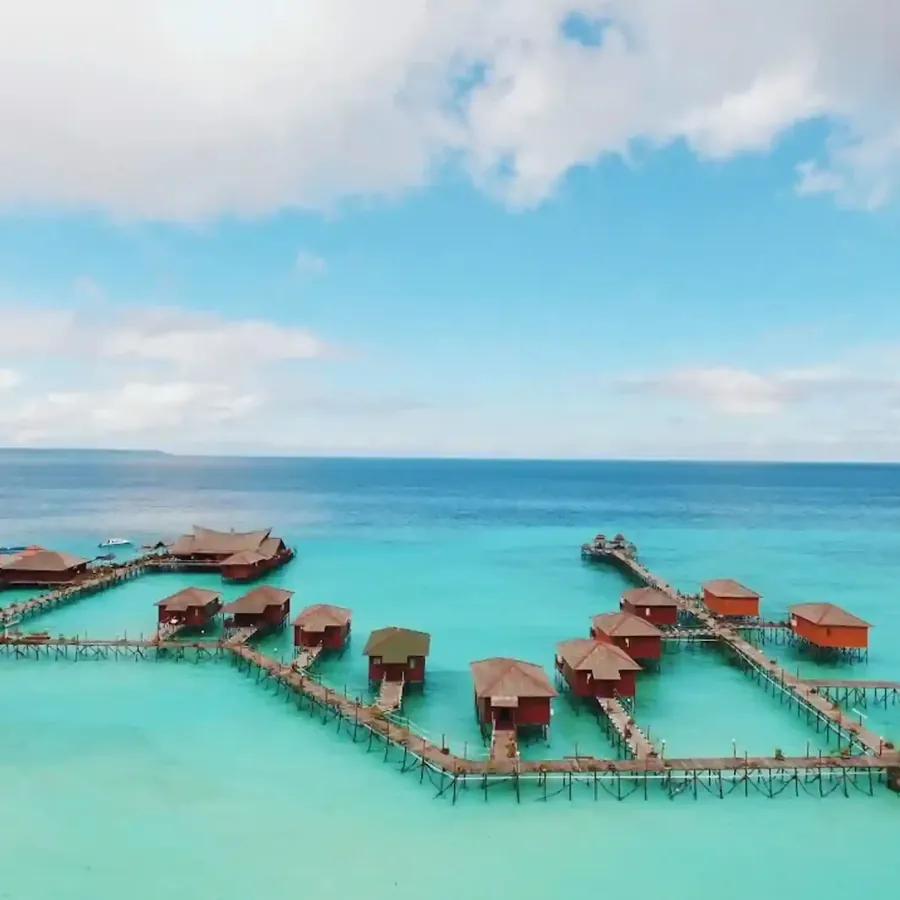
The single biggest misunderstanding about this region is that “Derawan” is one island. It is an archipelago, and the reason people fly to Berau is that four completely different marine experiences sit within one boat range of each other. A properly built Derawan island hopping tour is really a route-planning exercise, and this is the full list of stops the private trip is built around:

  • Talisayan — the mainland-side whale shark grounds, where the fishing platforms attract the animals. See the Talisayan whale shark tour page for how the early-morning session works.
  • Maratua — the largest and most dramatic island in the group, with the deep channel and cave systems. Full detail on the Maratua Island page.
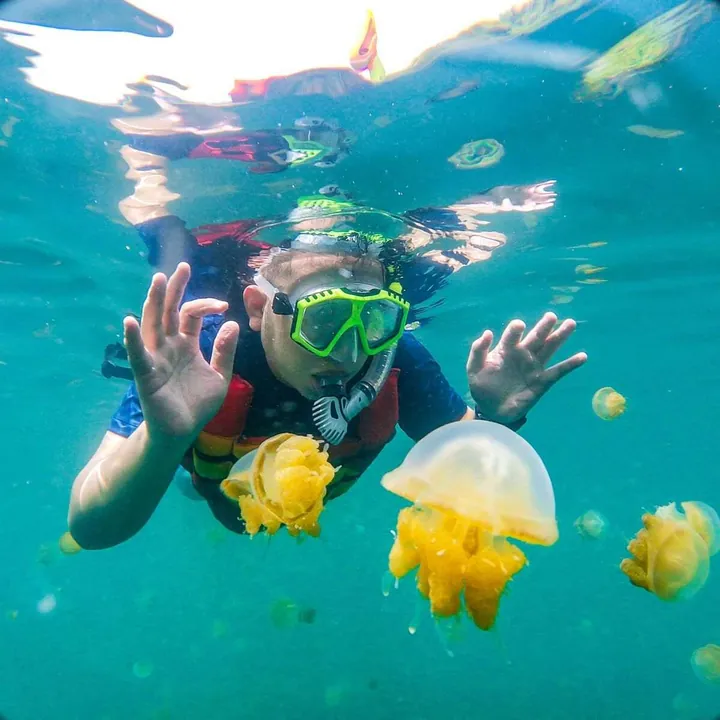
  • Kakaban — the landlocked lake holding stingless jellyfish, one of very few such lakes on earth. See Kakaban Island and jellyfish lake.
  • Sangalaki — the manta ray and green turtle island. See Sangalaki Island.
  • Goa Halo Tabung — a water-filled cave feature on Maratua.
  • Manta Point — the named cleaning and feeding area where manta encounters are most likely.
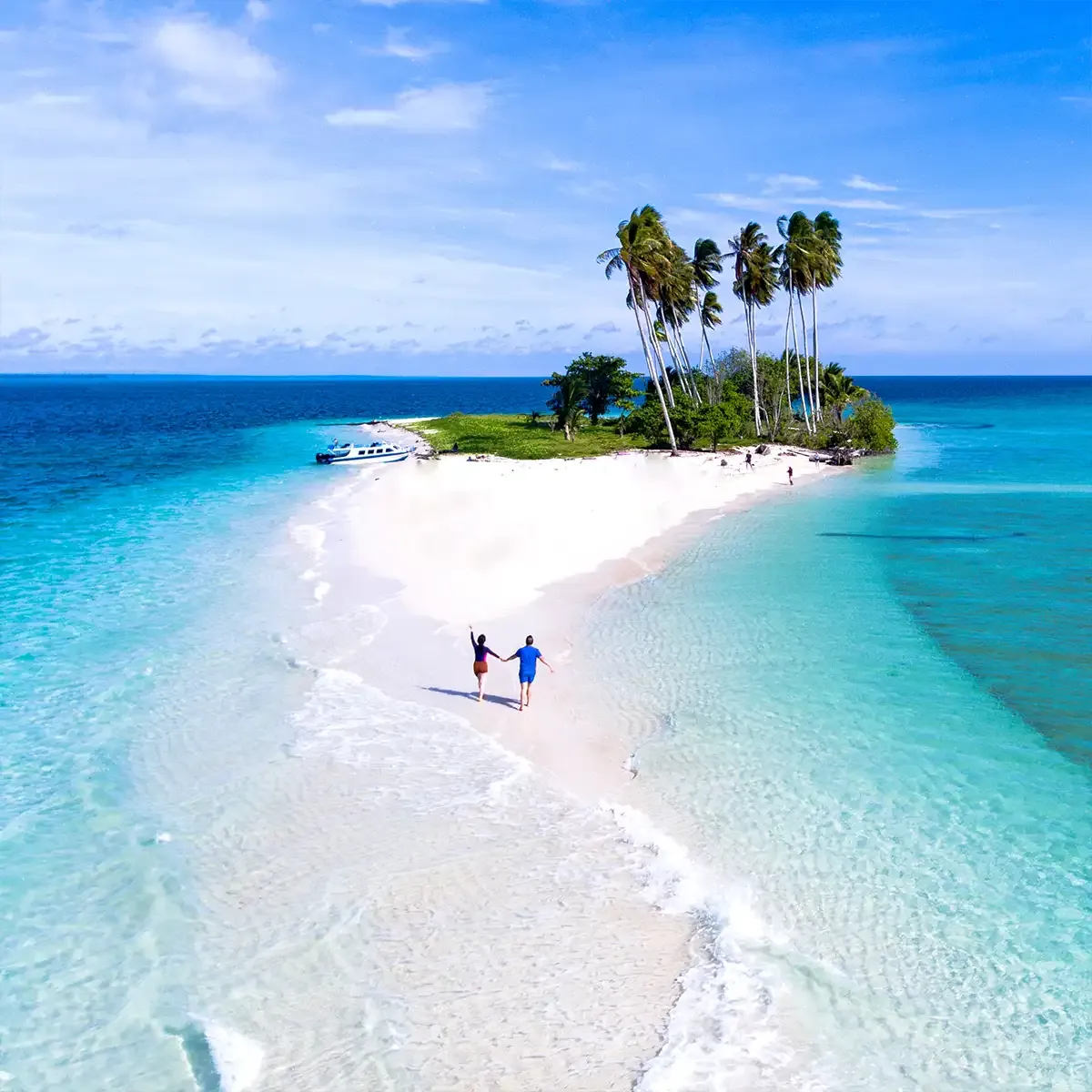
  • Pasir Gusung Sanggalau — a tidal sandbar that appears and disappears with the water level.
  • Laguna Kehe Daing — the enclosed lagoon reached through a narrow rock opening.
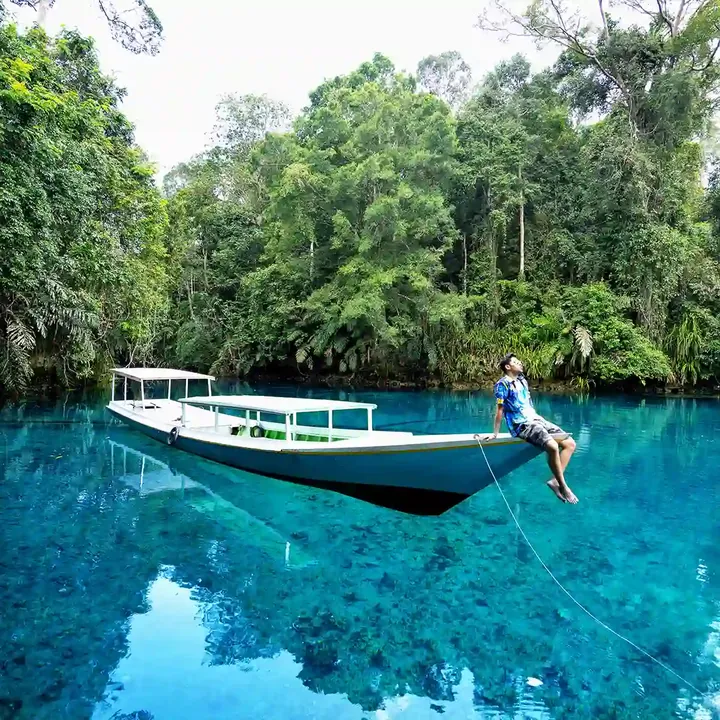
  • Labuan Cermin — the “mirror lake” on the mainland side, where fresh water sits above salt water. See Labuan Cermin Mirror Lake.

Nine stops is the reason island hopping beats a single-island stay here. If you book only a resort night on one island, you see one of these nine. The full route is what makes the flight into East Kalimantan worth it.

Derawan island hopping tour price: USD 281 to USD 672 per person

Pricing is per person and moves with two variables only: how many people travel together, and whether you take the standard or premium accommodation tier. There is no fixed single price, and any operator quoting one flat number regardless of party size is quoting you an average, not a cost.

Group sizeStandard tierPremium tier
2 peoplefrom USD 580 per personfrom USD 672 per person
3 peoplefrom USD 442 per personfrom USD 506 per person
4 peoplefrom USD 391 per personfrom USD 437 per person
5 peoplefrom USD 331 per personfrom USD 368 per person
6 peoplefrom USD 359 per personfrom USD 391 per person
7 peoplefrom USD 340 per personfrom USD 368 per person
8 peoplefrom USD 322 per personfrom USD 345 per person
9 peoplefrom USD 281 per personfrom USD 304 per person
10 peoplefrom USD 285 per personfrom USD 304 per person

Two honest notes on that grid. First, the per-person figure does not fall in a perfectly straight line as the group grows — six people costs slightly more per head than five, and ten slightly more than nine, because boat capacity and room configurations change at certain thresholds rather than scaling smoothly. Second, every figure is a “from” price: it is the starting point for a private departure and is confirmed in writing against your dates, your chosen tier and your flight times before anything is held. The minimum party size for a private departure is 2 people. Comparable structures apply across the wider Derawan tour packages range.

What the Derawan island hopping package covers — and what it does not

The price above is built around the private trip itself: the boat days that connect the nine stops, the ground handling from the Kalimarau Airport meeting point, and your nights in one of the properties in the accommodation pool below at your chosen tier.

What it does not cover, stated plainly so there is no surprise at the airport:

  • Flights. Because the trip meets you at Kalimarau Airport (BEJ), your air travel into Berau — from Jakarta, Balikpapan, Surabaya or anywhere else — is arranged separately and is not inside the per-person figure. The routing options are broken down on how to get to the Derawan Islands and Derawan via Berau.
  • Scuba diving as a separate discipline. Island hopping is a surface-and-snorkel product. If you want tanks, guided dives and dive-site sequencing, that is a different build — see the Derawan diving package or the Derawan liveaboard for multi-day underwater itineraries.
  • Personal spending, travel insurance and anything discretionary on the islands.

We also will not claim a fixed inclusion list on a public page that then differs from your actual confirmation. The full written inclusion and exclusion list is issued with your quotation for your specific dates and party size — that document, not this page, is the contractual one.

Kakaban and Sangalaki tour: the two stops that shape the whole itinerary

If you only remember two names, remember these. A Kakaban and Sangalaki tour is the core of the archipelago’s reputation and the pair most travellers are actually searching for when they type “island hopping”.

Kakaban holds a landlocked brackish lake whose jellyfish evolved without predators and lost their sting. You swim among them at snorkel depth — no tank, no experience needed — which is why it works for mixed-ability groups and families. Sangalaki is the opposite experience: open water, and the plankton-rich shallows where manta rays feed. Mantas are wild animals, so no operator on earth can guarantee them; what a good route can do is put you at Manta Point for manta ray snorkelling at the right state of tide and light. Sangalaki is also the archipelago’s green turtle nesting centre, and turtles are a near-daily sight rather than a lottery.

Because these two islands sit at different points of the compass, the sequence in which your boat takes them is decided by weather and tide on the day, not by a printed timetable. That is a feature of doing it privately.

3D2N or 4D3N: how many days a Derawan island hopping tour needs

The private trip runs in two shapes. The table below is the indicative distribution of the nine stops — final sequencing is confirmed per departure against tide, sea state and your inbound and outbound flight times.

3D2N4D3N
Nights on the islands23
Full boat days1–22–3
Core marine stops (Kakaban, Sangalaki, Maratua, Manta Point)YesYes
Whale shark session at TalisayanTight — depends on flight timesComfortable
Labuan Cermin mirror lakeTightComfortable
Weather buffer if a day is lost to sea stateNoneOne

Straight recommendation: if Talisayan whale sharks or Labuan Cermin matter to you, book 4D3N. The 3D2N version delivers the marine core cleanly but leaves no margin — one rough morning and something drops off the list. If you are undecided, the broader options are compared on the Derawan trip and Derawan island tour pages, and a snorkel-weighted variant is covered under Derawan snorkelling tour.

The season runs April to November — eight months, not twelve

Departures operate from April to November. That window is set by sea conditions: outside it, the crossings that make island hopping possible become unreliable, and a trip built on nine boat-accessed stops stops working. Within the season, conditions are workable throughout rather than concentrated in one perfect fortnight.

Two planning consequences. First, the season is finite, so the good dates inside it — school holidays, long weekends, the shoulder months when flights are cheaper — fill by group bookings well ahead. Second, wildlife is wild in all eight months: whale sharks at Talisayan and mantas at Sangalaki are natural aggregations, not a scheduled show, and any page promising you a sighting is selling you something it cannot deliver.

Where you stay between island days

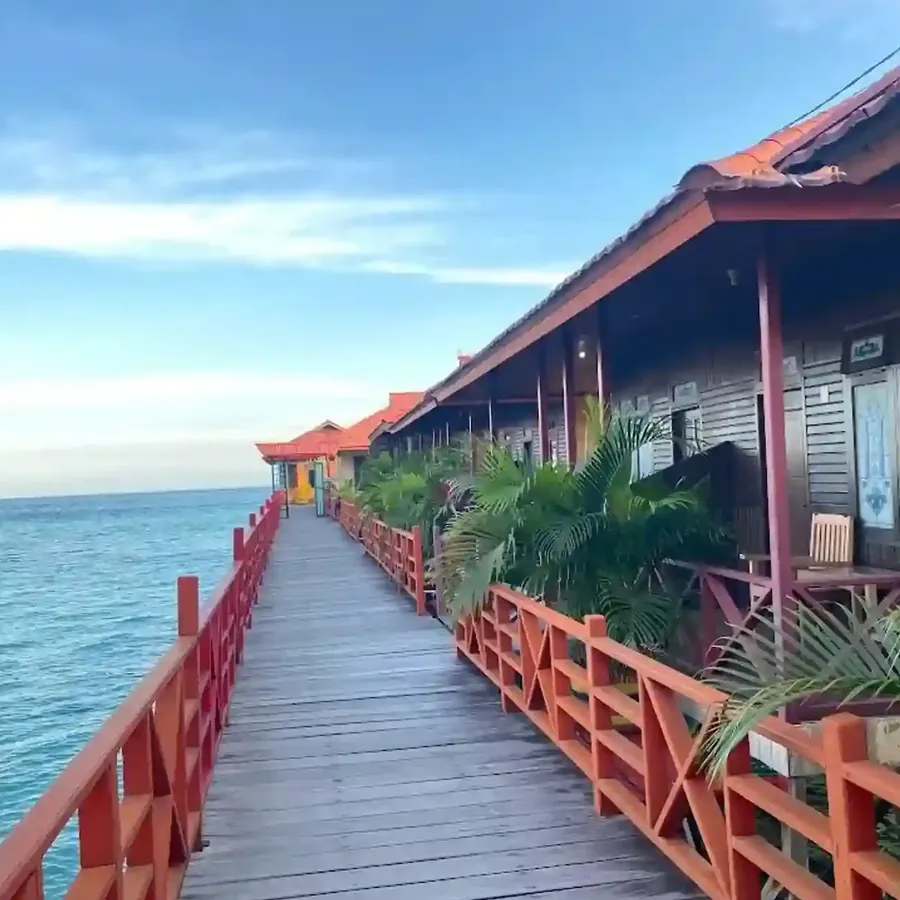
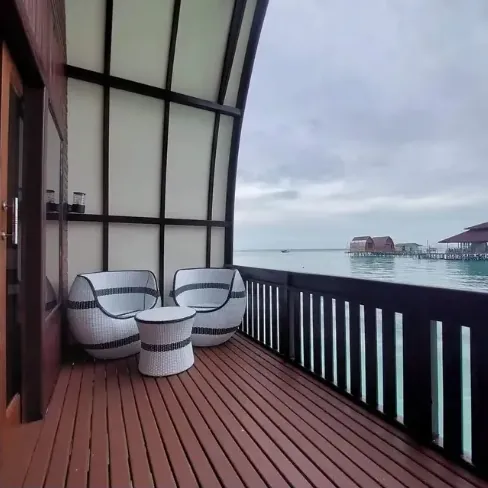
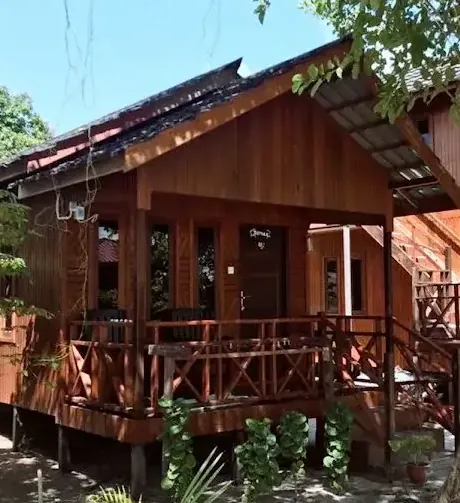
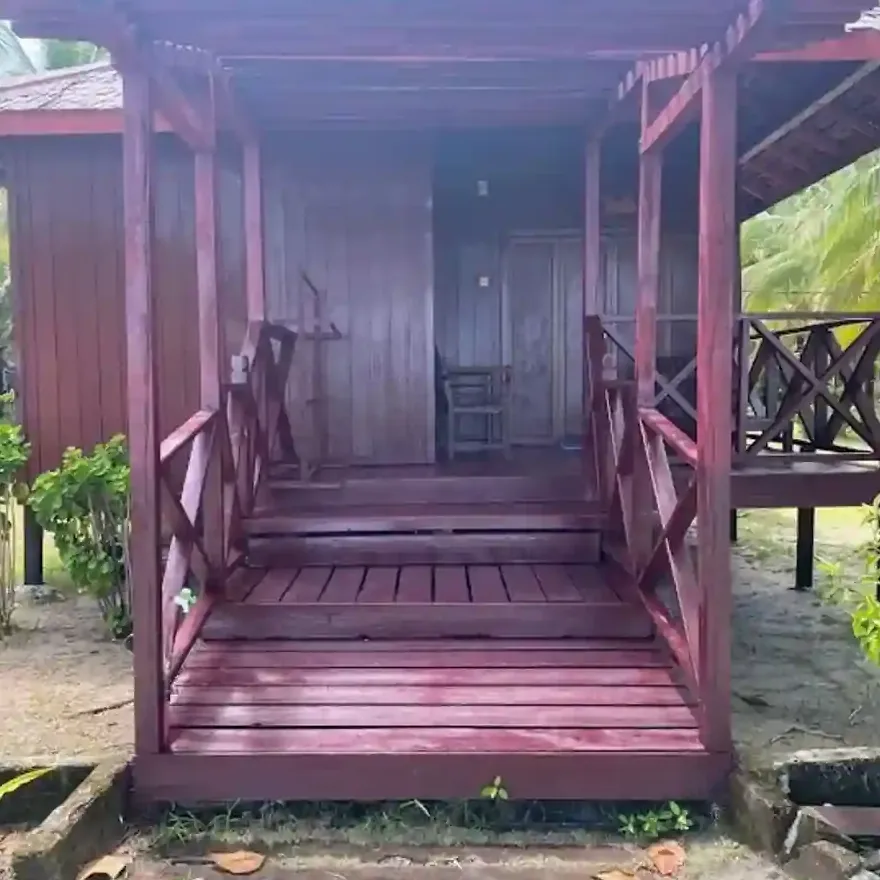
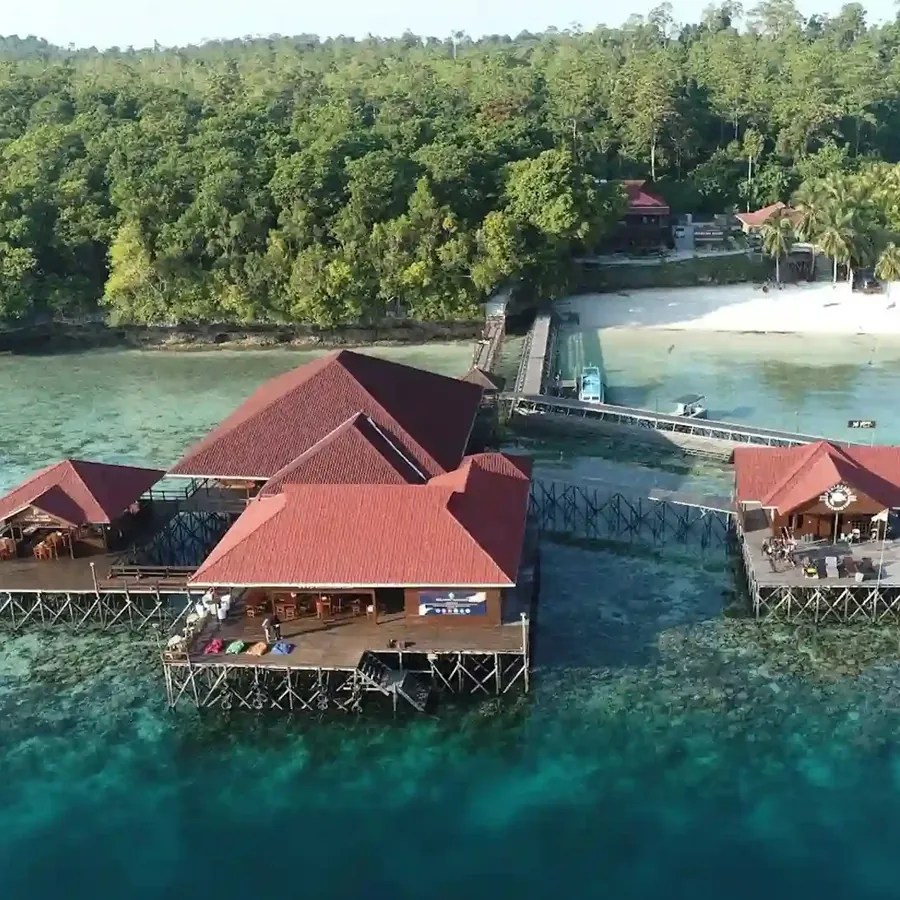
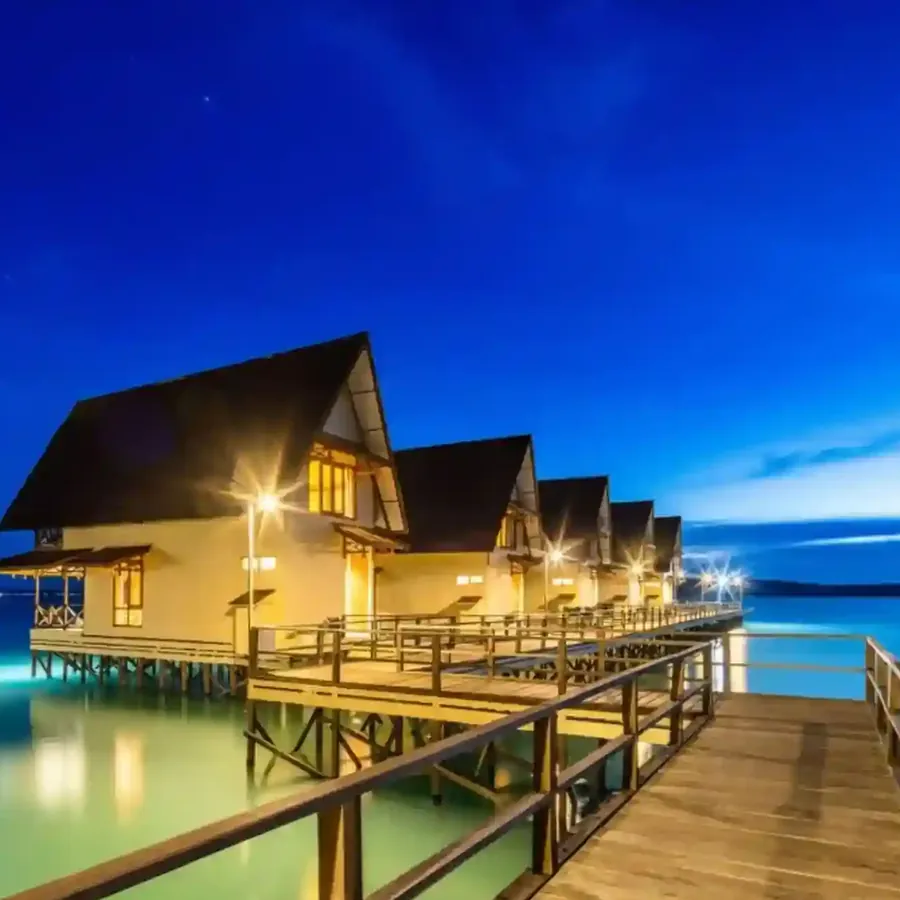
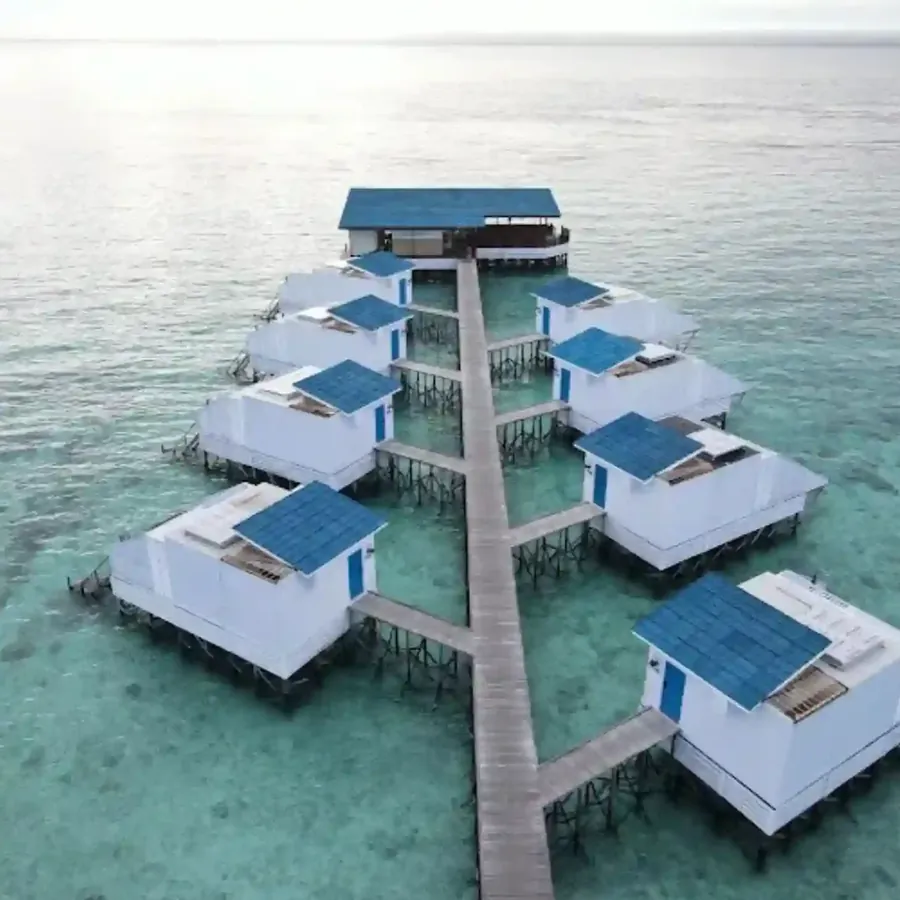
Accommodation is drawn from a fixed pool of properties across the archipelago and the mainland side, assigned by tier, group size and availability on your dates. The properties in the pool are: Reza Derawan Resort, Alfit VIP Borneo Cottage, Sienna Resort, Maratua Paradise Resort, Arasatu Villa, Pratasaba Resort and Seheku Paradise.

We do not publish star ratings, room counts or facility inventories for these properties on this page, because those details change and a stale number is worse than no number. What we will tell you before you commit is exactly which property your specific departure is assigned to and what its position means for your boat mornings — an island-side room shortens the run to Kakaban and Sangalaki, a mainland-side room shortens the run to Talisayan and Labuan Cermin. The full picture is on where to stay in the Derawan Islands.

How the trip starts: Kalimarau Airport, Berau

Every private departure meets at Kalimarau Airport (BEJ) in Berau, East Kalimantan. You fly in, you are met, and the trip begins from there — which is why your flights sit outside the package price and why your arrival time matters to the itinerary. Book an arrival early enough in the day that day one is a travel-and-transfer day rather than a wasted one, and an outbound departure late enough that day three or four still contains water.

Berau via Kalimarau is the primary gateway used for this product. The alternative approach through Tarakan exists and is documented separately on Derawan via Tarakan, but for this itinerary Kalimarau is the meeting point. Reef and shallow-water options once you are on the islands are mapped on Derawan snorkelling spots.

Booking a private Derawan island hopping tour

Indonesia Juara operates this trip as part of Juara Holding Group, which has been running Indonesian marine tourism since 2015. Departures are private from two people up, priced per person against the grid above, and quoted in writing with your dates, your tier, your assigned property and the full inclusion list before any payment is discussed.

To start, email sales@indonesiajuara.asia with your travel dates, party size, and whether Talisayan whale sharks or Labuan Cermin are must-haves — those two answers determine whether you need 3D2N or 4D3N, and they are the fastest route to an accurate number for your group.

Frequently Asked Questions

How much does a Derawan island hopping tour cost per person?

A private Derawan island hopping tour starts from USD 281 per person at a group of nine and from USD 580 per person for a party of two, on the standard tier. The premium tier runs from USD 304 to USD 672 per person across the same range. Every figure is a starting price confirmed against your actual dates, group size and accommodation tier — the per-person cost falls as the group grows, because the boat and ground costs are shared.

Can I see Kakaban jellyfish lake and Sangalaki manta rays on the same trip?

Yes — Kakaban and Sangalaki are both standard stops on the same island hopping itinerary, along with Maratua and Manta Point. Kakaban’s stingless jellyfish are a snorkel-depth swim in a landlocked lake and require no diving experience. Sangalaki’s manta rays are wild animals feeding in open shallows, so sightings are likely at the right tide but never guaranteed. Green turtles around Sangalaki are seen far more consistently than mantas.

When is the best time to book a Derawan island hopping package?

The Derawan island hopping season runs April to November, an eight-month window set by sea conditions on the inter-island crossings. Outside those months the boat legs that make a nine-stop itinerary possible become unreliable. Conditions are workable across the whole season rather than peaking in one narrow period, so the practical constraint is availability: popular dates inside April to November are taken by group bookings months ahead.

How many days do I need for a Derawan island hopping tour?

Four days and three nights is the length that fits all nine stops comfortably, including Talisayan whale sharks and Labuan Cermin mirror lake. The 3D2N version covers the marine core — Kakaban, Sangalaki, Maratua and Manta Point — but leaves no buffer, so one rough morning at sea means dropping a stop. If Talisayan or Labuan Cermin are the reason you are travelling, book 4D3N.

Where does the Derawan island hopping tour start?

Every departure meets at Kalimarau Airport (BEJ) in Berau, East Kalimantan, and the trip runs from there. Your flights into Berau are arranged separately and are not included in the per-person price, so schedule an arrival early enough in the day for the transfer and a departure late enough to keep your final day on the water. Berau via Kalimarau is the primary gateway for this itinerary.

Do I need to be a certified diver to join?

No certification is required — island hopping is a surface and snorkelling product, and the signature experiences at Kakaban, Sangalaki and Manta Point all happen at snorkel depth. Travellers who want tanks, guided descents and dive-site sequencing should look at the Derawan diving package or a liveaboard instead, which are built around underwater time rather than around covering nine island stops.