Derawan vs Maratua Island: Which is Best for Luxury Travel?

Updated: August 2026
- Accommodation: Maratua features high-end overwater villa resorts; Derawan offers more basic guesthouses.
- Atmosphere: Maratua is a secluded, serene sanctuary; Derawan is a bustling, social hub for divers.
- Amenities: Maratua’s resorts provide fine dining, spas, and private charters, amenities largely absent on Derawan.
The twin-engine speedboat cuts its throttle, and the percussive roar gives way to the gentle slap of water against the hull. Before you, the turquoise expanse of the Celebes Sea shimmers under an equatorial sun, holding two distinct promises. To the port side lies a dense cluster of wooden structures on stilts, the lively, communal pulse of Derawan Island. To starboard, a distant line of emerald green fringed by white sand marks the edge of Maratua, a much larger, more enigmatic atoll. The choice between them isn’t merely geographical; it’s a decision that will define the entire character of your journey into one of Indonesia’s last great marine frontiers. As your guide looks back, awaiting instruction, the question hangs in the humid air: which path delivers true luxury?
Geography and First Impressions: A Tale of Two Atolls
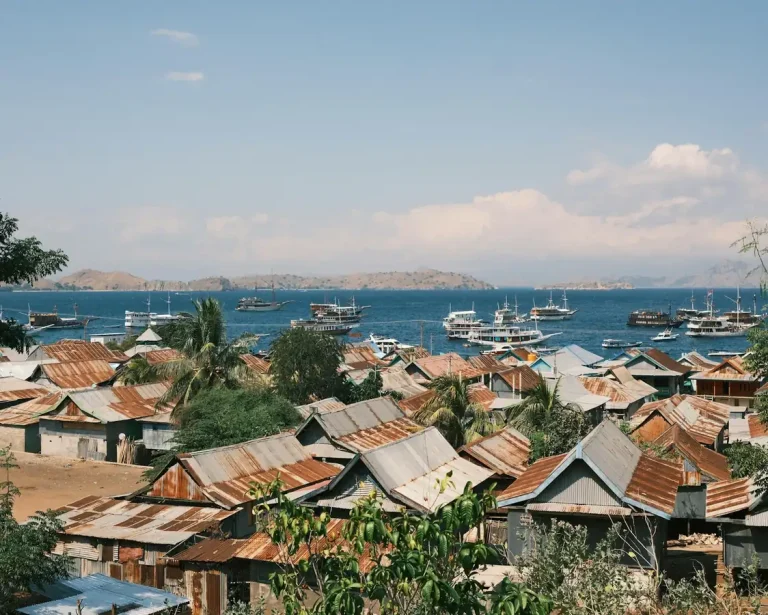
The fundamental difference between Derawan and Maratua becomes apparent long before you set foot on either. Derawan is compact, a teardrop of sand just 0.13 square kilometers in area, that you can circumnavigate on foot in under 30 minutes. Its shoreline is almost entirely developed, a contiguous line of homestays, dive shops, and small warungs built over the water. The impression is one of a vibrant, slightly chaotic water-village, a functional basecamp for the archipelago’s staggering underwater attractions. It’s the operational heart of the region, where dive boats jostle for position and the energy is social and constant. There is a palpable sense of community, but with it comes a distinct lack of privacy.
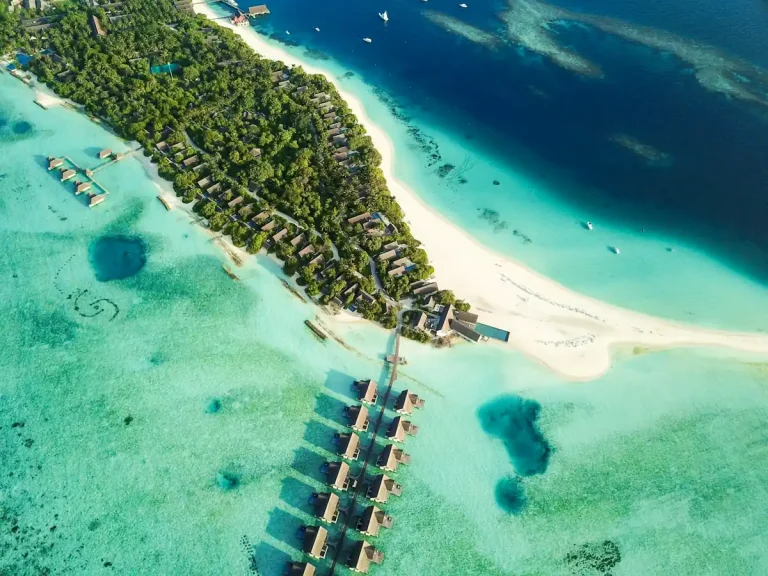
Maratua, by contrast, is a giant. A massive, U-shaped atoll covering over 2,400 hectares, it feels like a different world entirely. Most of the island remains undeveloped jungle, a wild interior that gives the coastline a sense of profound isolation. The luxury resorts here are not clustered together but are instead isolated pockets of civilization, each occupying its own stretch of pristine beach or private lagoon. The journey from Kalimarau Airport (BEJ) in Berau is about 2.5 to 3 hours by road to Tanjung Batu, then about 40 minutes by speedboat to Derawan, and Maratua is reached by speedboat from there. As our local fixer, Adi, noted while gesturing across the channel, “When you approach Derawan, you see the entire town. When you approach Maratua, you see only your resort. One is a hub, the other is a hideaway.”
Accommodation: Overwater Villas vs. Rustic Guesthouses
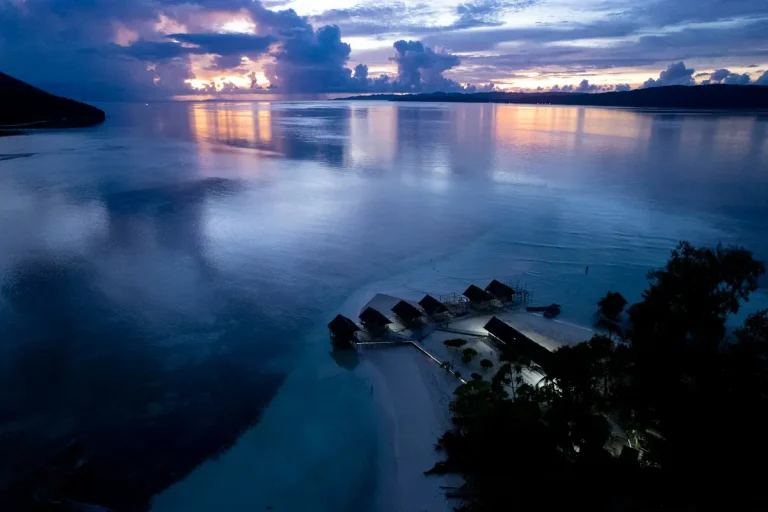
Nowhere is the distinction between the two islands more pronounced than in their accommodations. This is the central pillar of the luxury argument. Maratua is home to a handful of exclusive properties, most notably the Maratua Paradise Resort, which caters specifically to an affluent, international clientele. Here, the standard is the private overwater villa, complete with spacious sundecks, direct ladder access into the turquoise lagoon, and air-conditioned interiors. These resorts are self-contained ecosystems of comfort, offering amenities like full-service spas, infinity pools, and personalized service. A private 3D2N trip staying at Maratua Paradise Resort runs from USD 1,490 (Beach Villa) or USD 1,690 (Water Villa) in total for 2 guests, an investment in privacy and polished service. The experience is curated from arrival to departure, designed to insulate you from everything but the natural beauty of the atoll.
Derawan Island operates on an entirely different model. Its accommodation landscape is composed of more than 25 small guesthouses and homestays, which, while often clean and charming, are fundamentally basic. Rooms are simple, with functionality taking precedence over aesthetics. Air conditioning is common, but hot water can be a rarity. Our trips use water cottages on Derawan, Reza Derawan Resort and Water Cottage Alfit VIP Derawan, with a private 3D2N from USD 1,290 in total for 2 guests. While some newer guesthouses offer a slightly higher standard, they cannot compete with the sheer scale of luxury and privacy found on Maratua. The appeal of staying on derawan island is its authenticity and affordability, making it a perfect match for dedicated divers and backpackers who prioritize marine encounters over thread counts. For the traveler for whom the resort is as much a part of the destination as the diving, Maratua is the only contender.
The Diving Experience: Access vs. Exclusivity
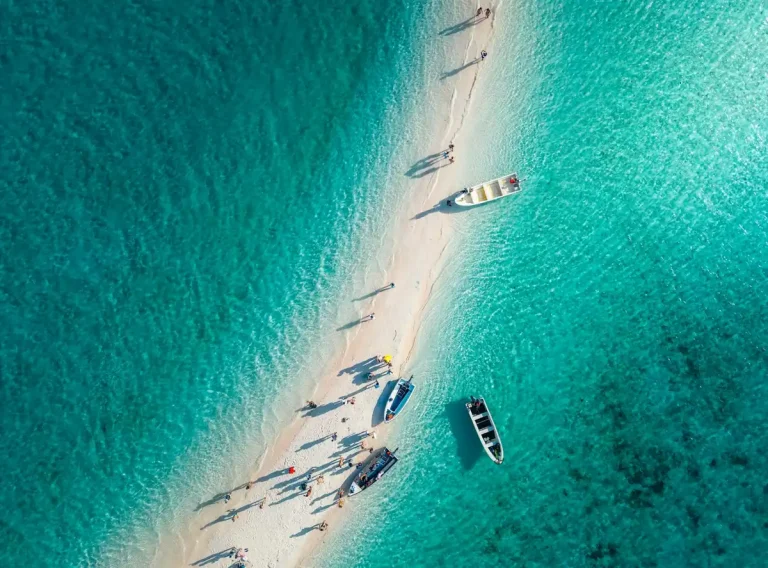
Both islands serve as gateways to the same legendary dive sites: Sangalaki’s manta ray cleaning stations, Kakaban’s stingless jellyfish lake, and Maratua’s own “Big Fish Country.” The difference lies not in what you see, but how you see it. Derawan is the undisputed logistical hub for diving in the archipelago. Every morning, its jetties buzz with activity as dozens of boats, often carrying groups of 8 to 12 divers from various guesthouses, set off for the day’s excursions. The atmosphere is energetic and communal, and it’s remarkably easy and cost-effective to organize trips. Our Derawan trips are snorkel-based; scuba diving is not included, and island hopping to Sangalaki and Kakaban is included in our trips. The trade-off is a loss of intimacy; you are part of a crowd, both on the boat and underwater.
Maratua’s resorts approach diving from a philosophy of exclusivity. They operate their own high-end, PADI-certified dive centers with meticulously maintained equipment and a high guide-to-guest ratio. While they offer the same excursions to Sangalaki and Kakaban, they are often conducted on more comfortable, less crowded boats. Many guests opt for private charters, ensuring a day tailored precisely to their schedule and interests. Furthermore, Maratua’s own dive sites, particularly the channel known as “The Wall,” are world-class and can be accessed within minutes. Isabelle, a French divemaster who has worked on both islands, put it succinctly: “On Derawan, you find a boat. On Maratua, a boat is found for you, and it waits.” This curated approach transforms the diving from a simple activity into a seamless luxury experience. The cost is higher, but the value is in the control and comfort it provides.
Onshore Life: Local Flavor vs. Curated Cuisine
Beyond the water, the islands offer starkly different lifestyles. On Derawan, life revolves around the village. Evening entertainment consists of strolling along the main jetty, watching green turtles forage in the shallows just meters away, and choosing between a handful of local eateries, or warungs. The menus are similar: grilled fish fresh off the boat, nasi goreng (fried rice), and simple vegetable dishes. It is authentic, delicious, and incredibly affordable. The social fabric is palpable; you are a guest in a living community. This is a powerful experience for many, but it is not a luxury one. There are no cocktail bars, no fine-dining restaurants, and no spas.
Maratua’s onshore experience is entirely resort-centric. After a day of diving or exploring, guests return to the sanctuary of their chosen property. Evenings are for sunset cocktails at the resort bar, followed by a multi-course dinner featuring a mix of international and elevated Indonesian cuisine. Private beachside dinners can be arranged, complete with candlelight and personal service. Other activities are resort-based: kayaking through the calm inner lagoon, indulging in a traditional Indonesian massage, or simply reading on the private deck of your villa. The focus is on relaxation and curated pleasure, a stark contrast to the lively, unscripted social scene of Derawan. For a holistic luxury vacation, where the onshore experience is as important as the offshore one, Maratua is unequivocally superior.
The Verdict: A Clear Choice for the Luxury Traveler
Ultimately, the “Derawan vs Maratua Island” debate is less about which is “better” and more about which is right for a specific type of travel. Derawan is an exceptional destination for the dedicated, budget-conscious diver who wants a social, authentic base from which to explore the region’s underwater marvels. It is a hub of activity and adventure, offering incredible value and a direct connection to the local culture. It serves as the perfect launching point for exploring the entire Derawan Island — Borneo’s Hidden Diving Atoll, as described by the official Indonesian tourism board.
However, for the luxury traveler, the choice is clear. Maratua Island delivers on every front where Derawan falls short. It offers seclusion, privacy, and high-end comfort in its exclusive overwater resorts. The service is personalized, the amenities are first-class, and the entire experience is designed to be seamless and serene. From arriving by speedboat to enjoying a gourmet meal on a deserted beach, Maratua is built for those who seek not just adventure, but refinement. It provides access to the same natural wonders—including the jellyfish of Kakaban, a site on the UNESCO World Heritage Tentative List—but frames them with an unparalleled level of comfort and exclusivity. For a journey to this remote corner of Borneo that feels less like an expedition and more like a retreat, Maratua is the only answer.
Quick FAQ: Derawan vs Maratua Island
Which island is better for non-divers?
Maratua is significantly better for non-divers. Its luxury resorts offer a complete holiday experience with private beaches, spas, pools, and calm lagoons for kayaking and paddle-boarding. Derawan’s appeal is almost exclusively tied to its function as a base for diving and snorkeling excursions, with limited onshore activities for those not participating.
What is the real cost difference?
The cost difference comes down to the stay you choose. On our private 3D2N trip for two, a Derawan water cottage at Reza Derawan Resort starts from USD 1,290 in total, while Maratua Paradise Resort starts from USD 1,490 (Beach Villa) or USD 1,690 (Water Villa), and Arasatu Resort’s Floating Villa from USD 2,090. The premium on Maratua pays for privacy, service, and superior accommodation.
Can I stay on Maratua and visit Derawan for a day?
Yes, it is possible. Maratua resorts can arrange a private boat for a day trip to Derawan, a journey of about 45-60 minutes each way. However, it is an uncommon request, as most guests on Maratua prefer to use their time exploring the more natural, uninhabited islands like Sangalaki and Kakaban or enjoying their resort’s private amenities.
The choice between these two Indonesian jewels ultimately defines your entire East Borneo experience. One offers immersion in a vibrant diving community, the other, a sanctuary of polished solitude. For the traveler who measures a trip not just by the sights seen but by the tranquility and comfort in which they are enjoyed, Maratua stands alone. Begin planning your journey by exploring our complete guide to the archipelago and discover the unique character of derawan island and its magnificent neighbors.